


Economics
Economics
The What-Me-Worry 2018 Federal Budget
By Robert Presser on March 4, 2018
 Hey Canada, things are going great! Unemployment is at 5.8%,a 4-decade low, we have the top growth rate of the G-7 nations since the second quarter of 2016 at 3.2%, and federal revenue growth has been stronger than expected. Oh, but we still have deficits planned for the next decade or so? We know that Liberal and NDP voters don’t care, so spending an extra $12-18billion per year with no end in sight allows the feds to pursue initiatives we all care deeply about – gender equality, reconciliation, and other promises from the 2015 Liberal election platform. Well, not so much for all those infrastructure spending plans, we can’t seem to get that money out the door – but no matter, with all the growth in other sectors we don’t need all those new roads, bridges or water treatment plants in any case!
Budget 2016: more state debt and no restraint
By Robert Presser on March 27, 2016
 The 2016-17 federal budget handed down by the Liberals tripled the expected deficit from $10 billion as expressed during the 2015 election campaign to $29.4 billion in one year. Harper was right when he ridiculed the promise as “just three, tiny $10 billion deficits.” What Canadians are really getting is deficits well into the future with no commitment from the government to balancing the books within their first mandate. Instead, the Liberals are focusing on holding the federal debt to about 30% of GDP, more or less where it is today. Since we are returning to spending future generations earnings on today’s consumption, we have a right to scrutinize the assumptions and priorities presented in this budget to determine whether there is value in the extra money being spent, regardless of who is ultimately going to pay it back, if ever.
Bill Morneau, stimulate me!
By Robert Presser on November 25, 2015
 On Friday, November 20th Canada’s new Finance Minister, Bill Morneau, issued an accounting update on federal spending and revenue projections through March 2016, the end of the fiscal year. His presentation was largely based on estimates tabled by the Parliamentary Budget Officer earlier in the week, giving him non-partisan backing for his projection that the Conservatives’ $1.6 billion surplus in the first six months of the year will morph into a projected year-end deficit of $3 billion. Given all the horrible news about ISIS attacks in Paris, Syrian refugee resettlement plans and the lockdown in Brussels, why should you care? The answer is that even these small variations in government projections will have a major impact on the Trudeau government’s ability to make good on its campaign promises.
Federal Budget 2015: Winning Conditions or Not?
By Robert Presser on May 2, 2015
 Joe Oliver probably never imagined that his first budget would be delivered late and under the dual pressures of an election campaign on the horizon and falling revenues from oil royalties as a serious constraint on spending promises. Without the sudden passing of Minister Flaherty in 2014, Oliver would have been an unlikely candidate for the job of finance minister at all.. He came to electoral politics late in life after a long career in business and finance, arguably well equipped to handle the job – it’s just that the government’s front bench is mostly under 55 and it is rare that a 70 year-old gets the most critical economic portfolio at the cabinet table.
Bombardier payment puts government priorities into question
By Taylor C. Noakes on April 19, 2015

On Thursday April 2nd 2015 there was a large anti-austerity protest in Montreal. Several hundred kilometres to the northeast of the city, at the Bombardier plant in the small Kamouraskan town of La Pocatiere, Quebec’s economy minister, Jacques Daoust, declared that if the province were truly in a state of austerity it could not issue a $31.5 million advance payment for new Metro trains.
Perhaps the students, teachers, nurses and diverse other public sector workers didn’t get the message, as apparently austerity had been overcome since the release of the budget on March 26th. Reported total budget cuts amounted to more than $700 million, with healthcare and education taking the hardest hit as anticipated.
The "Other" Israel. Upcoming conference showcases "Start-Up Nation"
By Charles Bybelezer on April 19, 2015
 In some ways, Israel is indeed what many have been conditioned to see: A conflict zone.
Directly to the north is Syria, whose civil war has left more than 200,000 people dead and terrorist groups manning the Golan Heights along Israel’s border. Next door, Lebanon is run by the Iranian proxy Hezbollah, the leader of which has encouraged world Jewry to immigrate en masse to Israel, as the concentration of Jews there would make it easier to dispose of them in one fell-swoop.
Time for an economic «risque de tonnerre!»
By Beryl Wajsman on March 23, 2015
 Thursday, Quebec unveils its new budget. It should have one critical, straightforward direction. Cut taxes. Cut bureaucrats. Restart our resource base. Other than these priorities, there is nowhere left to go and nothing left to take. Taxation is not a way to raise revenues. It is time for Quebec to stop pushing people and companies away.
I don’t say this just because the Godbout report last week recommended sweeping changes in Quebec’s tax structure. It was gratifying to read the Godbout Report state clearly and candidly that radical tax cuts are the critical necessary step to economic revival. But frankly, it is just common sense. And M. Couillard recognized that, in an interview with me in Feb. 2013 when he said, “We need a deep reform so that taking a job does not leave one in a worse net position than if they just remained unemployed.”
Online petition demands Hydro rate freeze
By Stephanie Azran on February 3, 2015
 One of the latest petitions to hit activist website change.org is one that could affect the lives of hundreds of thousands of Quebecois and Quebecoises trying to keep warm.
Solene Tanguay, a self-described single mother from the Quebec City area, mounted a petition demanding that Hydro Quebec freeze residential electricity rates.
Since launching, the petition has attracted over 16,000 supporters and Tanguay is looking for almost 10,000 more.
To sign the petition, please visit change.org and search for Hydro-Quebec.
Coercive rule and regulation killing Montreal business
By Robert Presser on December 8, 2014
 Montreal’s problems reflected in Massimo Lecas’ view from Buonanotte’s head table
As a founding partner in Buonanotte on St. Laurent, one of Montreal’s best-known restaurants, Massimo Lecas is passionate about his business and his city. In conversation this week covering the challenges he faces as a restaurateur and his frustrations with Montreal’s dysfunctional layers of governance, his plight is emblematic of what ails Montreal’s retail, food and entertainment industries.
Taxes And Dual Citizenship
By David T. Jones on September 14, 2014
 Washington, DC - Everybody despises taxes. The standard lament is “Nothing is inevitable but death and taxes.”
At best taxpayers put a good face on the process, accepting that taxes are a necessary element of civilization. At a minimum, virtually all agree that we require taxes for security from foreign invasion and to protect against home invasion. On a national and local level, security is an accepted use of taxes.
Other than security, however, there is endless argument regarding whether a service or benefit (education, health, postal delivery, water purification, disease eradication, transportation, infrastructure) should be paid by government taxes or private funding.
A Brief History Of Modern Inflation
By Robert Presser on August 31, 2014
Canadian consumer debt remains a concern to policymakers in government and at the BofC, and our real estate prices enjoy high single digit price increases year over year, which would not be possible without the generous variable rate mortgages the banks continue to hand out. Should you be worried or care about mounting debts in Canada? The answer is yes, since eventually either interest rates will rise to levels that the debtors cannot afford, inflation will re-ignite to destroy the value of your savings, or perhaps both, last seen in the late 1970s.
Time for an economic «risque de tonnerre!»
By Beryl Wajsman on June 10, 2014
It was a start. It is important that Premier Couillard and Finance Minister Leitao took the first steps. No tax increases. Hiring freezes in the civil service. At least some symbolic cuts to state engineering agencies like the OQLF that are now eating up about a fifth of our expenditures. Tax cuts for small businesses. Mr. Leitao called this an interim budget pointing out that there are only six months left in the calendar year. It is generally expected that more progress will come in next March’s full budget. Here is what we need to see.
Quebec’s 2014 Budget is aimed at the ROC
By Robert Presser on June 9, 2014
Put aside all the noise generated by the political chattering classes over the figures released in Quebec’s budget last Thursday, since this year’s figures don’t matter. The only message you need to retain is that this is just the beginning – the re-imagining of the role of the state in Quebecker’s lives will wait until next year. When we have a total provincial debt approaching $200 billion, having the deficit for 2013-14 come in $600 million higher than previously estimated is not that important since no one believed the figures that the former PQ government had tabled in any case, both for their first budget and the one that died when they were defeated.
TMR Mall: Time To Protect Small Merchants From Rogue Landlords. Let's End The "Race To The Bottom"
By Beryl Wajsman on May 26, 2014
 Eighty per cent of our new jobs are created by small business.
Yet it is small business-people who have the most trouble getting credit; the most put upon by government compliance and revenue agents and the most abused by landlords. Most have poured everything they have into their businesses.
They like the independence of being their own bosses.
But there is little money available for big law to protect them from big power. But they are our neighbours. They are the bedrock of our communities.
And it’s time we awoke to that fact and band together to protect them and each other.
Power Play At The Pumps
By Beryl Wajsman on April 23, 2014
I wrote this in 2007 as gas prices were in the 1.20-1.40 a litre range. Now that they have broken 1.50 today in Quebec, it seems opportune to republish this. Sadly the numbers quoted here are more or less the same as seven years ago. It is a crisis. It is also unconscionable. ~ BW
"The bottom line is that in the life of every nation there comes a time of reckoning. That reckoning determines whether its people have the maturity to cast aside false notions and fictitious pieties and assert the strength of their nationhood. If that maturity is lacking, if there is no courage, then citizens condemn themselves to eternal subservience to vested interests."
Budget 2014: “Move along, nothing to see here!”
By Robert Presser on February 15, 2014
The problem with reading most of the post-budget analysis is that it fails to answer the critical question, “what does all this mean to me?” This lighter analysis will attempt to answer this query both metaphorically and through several Canadian personas.
Overall, accepting this budget is like buying a new car in the last year of the current model’s production, right after spy photos come out showing you what the replacement will look like. Unfortunately for you, the current family ride died and this year’s model meets all your needs, though you wish you could hold out just a little longer for the newer, sleeker, sexier, more economical (if that’s your thing) version.
Montreal…meet Mumbai!
By Robert Presser on October 28, 2013
I write this on my way home from my second business trip to Mumbai in the past year. When I visit a new country, I ask a lot of questions of those I meet about their daily lives, their opinions of their government, their perceived quality of the services they receive and their expectations for the future. I also read the local papers. At the end of this four-day trip I developed the following observations of similarities between our two cities. Montrealers often joke that we are on the path to becoming a third-world city. The reality is that we already share some remarkable traits with Mumbai.
Spiking rates: A Wake-up call?
By David Lisbona on July 8, 2013
 A simple spike in rates
That’s all that did it. A jump of the rate on the U.S. 10-year from somewhere in the 1.80% range to slightly above 2.10% and sure enough it was as if someone turned off the music and you had to find a chair.
Many investing folks didn’t really appreciate the move and the resulting sentiment change was noteworthy.
So what happened?
Obama, the Sequel: What is the standard of success for his second term?
By Robert Presser on March 11, 2013
 No one does an inauguration like the Americans, and it is a marvelous spectacle to watch. What made it even more memorable was the progressive, liberal bent to his inaugural address that included a broad range of initiatives from gun control to gay marriage to the preservation of Medicare and Medicaid. Whether you agree with that agenda or not, the fight with the Republican-controlled House of Representatives on all of these issues, perhaps concurrently, will make for a hyperactive 2013 agenda and keep the political class fully engaged. What is not so clear is how Obama intends to deal with legacy issues from his first term on which he was barely engaged at worst (like the budget debate) or leading from behind (Libya, Syria, Iran, North Korea, Pakistan, you get the picture).
S’assurer que les entreprises canadiennes soient à la fine pointe
By Marc Garneau on February 28, 2013
 Le Canada a besoin d’être bien positionné pour l’avenir. Et en ce moment ce n’est pas le cas.
Le Canada c’est sorti de la pire crise économique, entre autre, grâce à l’abondance de ses ressources naturelles. Mais une trop grande dépendance vis-à-vis celles-ci pourrait s’avérer dangereux puisque notre économique dépendrait alors de la fluctuation des marchés. Nous avons besoin d’une économie diversifiée et compétitive dans plusieurs secteurs différents. Dans le secteur manufacturier, dans les secteurs de l’économie du savoir aussi bien que dans le développement des ressources naturelles.
Who’s Afraid of the Big Bad Fiscal Cliff?
By Robert Presser on December 9, 2012
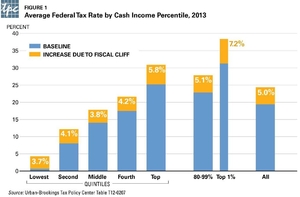 The concept of MAD (Mutually Assured Destruction) was a key element of deterrence that kept the peace during the Cold War, while the nuclear powers fought proxy wars around the globe but avoided direct confrontation. The FC was born in a similar fashion in that it represented such a vicious cocktail of spending cuts and tax increases as to be unimaginable in actual application. Conceived in the summer of 2011 as part of the agreement to raise the US debt ceiling, it was supposed to force the Republican and Democratic leadership back to the negotiating table before January 1, 2013 to strike a grand bargain on fiscal reform.
Revenue Quebec reforms regulations Minister and Director-General take action after problems brought to light
By Beryl Wajsman on October 19, 2012
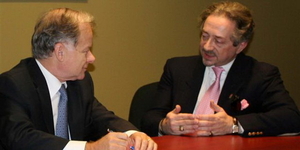 When we take on advocacy cases and causes they usually center on an individual. An individual who has suffered a prejudice that is demonstrative of a broader systemic problem whether in a government department or within a major corporation. Individual cases that have within them issues illustrative of universal applicability. But sometimes it can't be done that way. Fear and impotence stand in the way.
Fear of retribution, and impotence in the face of a maze of ever-changing rules and regulations that baffle even experts. That is the way it is for most citizens who feel victimized by Revenue Quebec and have no idea what to do about it. Many call us.
Quebec’s Debt: Who manages better? It depends on what's an investment and what's an expense
By Robert Presser on October 19, 2012
 In the aftermath of the Quebec election, taxpayers wait with clenched teeth for a coherent taxation strategy to make up for the lost revenue from the cancellation of the tuition hikes, the abolition of the health care tax for some (with an increase for others) and the cost of the PQ’s election promises.
On Practicality
By Steven Lightfoot on July 25, 2012
Economic theory typically assumes that, given the right incentives, technological advancement—innovation—is limitless. As economists Steven D. Levitt and Stephen J. Dubner confirm, “The typical economist believes the world has not yet invented a problem that he cannot fix if given a free hand to design the proper incentive scheme.” (Freakonomics, 2005). Practicing engineers have a more nuanced view. They will acknowledge that technological advancement can sometimes be aided by legislative or economic levers, but they also recognize that hard technical limitations sometimes exist. These limitations can be related to physical laws, or they can be practical in nature.
The Music has Stopped – Why Are We Still Dancing?
By Robert Presser on July 18, 2012
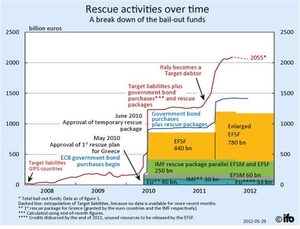 Partygoers are familiar with the ritual at the end of a festive evening – the band announces the last song, those still up for a dance take to the floor, other revellers observe, have a last drink or finish up their conversations. When the music’s over, the band thanks everyone for coming out, the lights go up and then the staffers encourage everyone to head to the door. At least this is how it is supposed to be.
This is not the case if the party is being thrown by the debt-laden developed economies of the world, and especially those within the European Economic Community who are members of the Eurozone.
Gems from the 2012 Budget
By Robert Presser on May 18, 2012
 So far, Canadians are an easy lot to distract. The big budget lead item was the gradual increase in the age of eligibility for Old Age Security (OAS) and the Guaranteed Income Supplement (GIS) from 65 to 67 by 2023. The provinces accused the federal government of downloading since their governments will step in to support those seniors who cannot afford to lose the extra two years of federal payments. Ageing baby-boomers were upset by the change, since most had taken retirement support at 65 as an unchangeable right regardless of the fiscal ability of the government to support it.
Too frail to fail: a look at seniors' residence failures
By Robert Frank on May 18, 2012
 Businesses fail all the time. It’s called creative destruction, and it’s one of the things that North America responds to exceedingly well. That makes our economy more dynamic than Europe, where bankruptcy is still thought of as a moral failure, the way that adultery is thought of here.
In contrast, North American insolvency is usually a stigma-free way to liberate capital. It lets those who have gone bankrupt quickly pick up the pieces and move on.
Greece again?
By Robert Elman on May 18, 2012
It has been two years and a snit, since I wrote about Greece, and the rest of the PIIGS.
Well it’s difficult to leave well enough alone.
Question: How can a five foot 7 inch Greek exit from a six ft deep hole that is built on quicksand? Answer: You can’t.
This hole with quicksand is the Greek living under the austerity rules of the ECB
THE PRICE OF AUSTERITY
By Alex Himelfarb on March 12, 2012
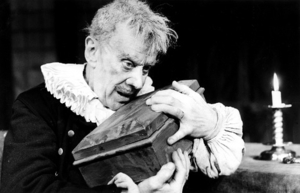 Austerity, we have been told repeatedly by pundits and political leaders, is the defining issue in these uncertain times, the solution to our economic challenges.
We have been given fair warning that the next federal budget will be first about cuts – cuts to government even as we continue to cut taxes. We can expect the same from most provincial budgets.
This, we are told, is what must be done. Austerity is not simply the best way, the argument goes, but the only way, and not just for us but for our friends and allies. Canada has become the champion of austerity.
Deutschland Uber Alles?
By Robert Presser on March 12, 2012
 Decades ago, Konrad Adenauer spoke of Germany’s postwar place in Europe when he said, “A European Germany, not a German Europe.” Since Adenauer uttered those words, Germany, together with France have been at the core of all the great initiatives to create greater European integration and cooperation – the formation of the EU, the opening up to former Eastern Bloc nations, and the adoption of the Euro. Now that the EU is in crisis over debt, deficits and currency devaluation, Germany has chosen to assert greater leadership in its own interests, effectively vetoing repeated calls to have theEuropean Central Bank act as a bank of last resort and buy up Greek, Italian and Spanish debt (as a start).
Angie and Sarko save the Euro!
By Robert Presser on December 16, 2011
The following conversation was overheard at the weekly emergency meeting of the European First Ministers prior to the G20 meeting in Cannes. German Chancellor Angela Merkel and French President Nicolas Sarkozy were reviewing the final communiqué before meeting the press. Sarkozy (NS) and Merkel (AM) are grappling with the challenge of coming up with a solution to the Euro debt crisis once and for all, since previous proposals failed to calm international markets...
It's all Greek to Me: Linking the delusions of the Occupy Movement and the EU protestors
By Robert Presser on December 16, 2011
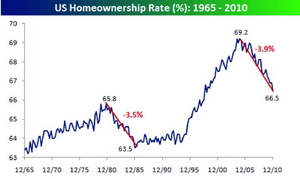 As the Occupy movement clashes with municipal governments across North America and protests continue against austerity in Europe, governments, the broader public and the media continue to debate as to what these protesters really want. The Occupiers and European protestors decry the “inequality” and “injustice” of the current western economic model that has bred “excesses” thatfavoured the top one percent of taxpayers. However, most of the other 99% have not embraced the movement-why not? Perhaps an investigation of these terms will help us figure out why.
The lingering costs of 9/11
By Robert Presser on October 26, 2011
Looking back on the economic aftermath of the terrorist attacks on the World Trade Center is a difficult process because so much of it involves speculation as to what might have been. How would the US have spent, or better yet, not spent, the one to two trillion dollars required to fund the wars in Afghanistan and Iraq? How much growth has been denied to the developing world because of curtailed investment out of the fear of continued attacks on first world assets abroad? What opportunities have been missed because of travel avoidance in our personal and professional lives? All of these hypothetical and theoretical alternative economic scenarios are challenging to quantify but are worth considering if we are to chart an economic course through what looks to become a decades-long war against international terrorism.
Teetering on the edge of the unknown
By Robert Presser on August 26, 2011
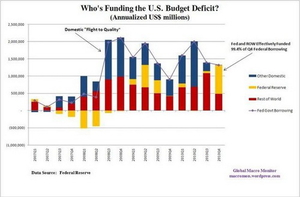 As I write this article I cannot say with any degree of optimism that any of these struggles will produce a positive outcome. The unprecedented, multi-dimensional (military, social and economic) tumult we are currently experiencing is unprecedented in modern history outside of a major world war. Our collective ability to muddle through thus far is testament to the efficacy of modern international cooperation among developed and developing nations. Those who believe that our institutions like the United Nations, the International Monetary Fund, the World Bank, the European Bank, the G20 and others are compromised and ineffectual should pause and consider what would have happened since 2008 had these institutions not provided a forum for discussion and coordinated response.
Majority economics in a polarized house
By Robert Presser on June 10, 2011
Stephen Harper already led the longest-serving minority government in Canadian history before his majority win on May 2nd. After five years of centrist economic management as a necessity for passing budgets as a minority government, Harper now has an opportunity to put his and the Conservative Party’s stamp on the Canadian economy for the coming decade. The question now becomes whether the government will continue to pursue centrist, incremental policies or if it will embrace several big, bold, transformational ideas to leave a lasting effect on the Canadian economy.


