


Economics
Economics
Dr. Patrick Moore “How Greenpeace turned its back on science”
By P.A. Sévigny on April 21, 2011
Following a recent lunch and lecture in Montreal’s well-appointed Omni Hotel, city business people were lining up to meet Patrick Moore who was one of the founding members of the Greenpeace organization and is now one of its more notable critics.
“We did a lot of good things over the early years,” said Moore, “…but after 15 years, there came a point where we had to part ways over obvious scientific issues.”
The Flashlight at the End of the Tunnel Can we cement a fragile recovery in 2011?
By Robert Presser on February 16, 2011
Statistics often mask a reality that is more complex than the numbers. The US has been in recovery for over a year, yet most Americans will tell you that it feels as if it has not even started. In Canada, our recession was the mildest of all the industrialized nations yet our mindset is still influenced by the slow recovery of our southern neighbour. Economists in both countries have said that employment growth is the key to sustaining the recovery; consumer confidence and, eventually, consumer spending must be strengthened via income growth overall.
Guns and money running for the exits: Timidity and introspection characterize the latest G20 and NATO summits
By Robert Presser on December 27, 2010
Two important international meetings took place in November – the G20 met in Seoul and NATO met in Lisbon. While one is an international economic forum and the other is a military alliance originally conceived to prevent Soviet agression, their outcomes are linked by a lack of vigour and funding. The flaccid direction from both of these summits does not bode well for the near future of economic cooperation nor for a coordinated response to serious threats from Iran, the Taliban/Al Qaida and North Korea.
Will the IMF bailout help Ireland recover from the debt crisis?
By Arthur-Paul Strigini on December 27, 2010
 How will the Irish economy recover from the debt crisis? Will the bailout plan work? And will the Irish economy bounce back quickly? How will the Irish people be affected by this situation? These are some of the questions one can ask after the events of the last few weeks.
The Economics of the Long Wars
By Robert Presser on November 4, 2010
 A US president comes to power promising a change in foreign policy after the previous administration is discredited by overseas wars and tensions among its allies. A recent world financial crisis, coupled with increased spending on social programs has strained government spending. Upon entering office, the new president increases US military iniiatives in the hope of bringing a swift end to the fighting. Almost two years into his mandate, the mid-term elections loom and the president is facing important losses in both the House and Senate, threatening his administration’s ability to pursue its agenda. A presidency that began with so much promise has delivered little success abroad and at home, and fears the results coming in November.
Canadian High Speed Rail: More Promise than Reality?
By Robert Presser on September 9, 2010
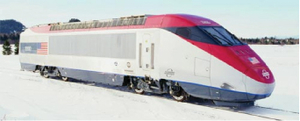 There are two figures readers need to keep in mind as they contemplate the possibility of boarding a 250 km/h train between Montreal and Toronto: 511 and 19. The 511 is the number of kilometers of High Speed Rail (HSR) that Brazil plans to build to link its largest cities, Sao Paulo and Rio de Janeiro via Campinas. The 19 is the number of billions of US dollars this project is likely to cost. The Brazilians deserve a great deal of credit for not hiding the truth from their population as to the cost and complexity of the project. Creating HSR in Brazil is essential to relieving pressure from Brazil’s overcrowded airports and its decaying roads, which are overwhelmed by crowded buses that fight with the truck traffic between the two massive population hubs.
Technology as Magic...in an age of pessimism
By Steven Lightfoot on September 9, 2010
Robert Goddard was a dreamer and inventor. Born in Massachusetts in 1882, he was a sickly child, and fell behind his fellow students. But he had an insatiable curiosity about the physical world and was a voracious reader. He managed to become valedictorian of his high school class, stating in his address, "It has often proved true that the dream of yesterday is the hope of today, and the reality of tomorrow."
Stimulate or Decimate? A post-summit briefing note for the G20 leadership
By Robert Presser on July 22, 2010
Dear G20 leaders,
First of all, congratulations are in order for emerging with anything resembling a commitment to fiscal restraint at all, given the differing economic environments you are all facing. The message was simple and direct: cut deficits in half by 2013 and stabilize debt to GDP ratios by 2016. Boy, are you lucky that the majority of populist journalists ran to file the story before they read the fine print, because otherwise the solidarity you displayed in the group photo would look more like Swiss cheese. Japan gets an exemption from the debt level targets because they are still fighting deflation leftover from the last recession, and the US federal government is busy spending more, not less, to compensate for state budgets that are being slashed to the bone.
Towards a new quiet economic revolution
By Prof. Thomas Velk on June 10, 2010
The fundamental notion that lay at the heart of the economic Quiet Revolution in Quebec was that central state planning, management and control would pay off in effective delivery of vital services at affordable prices to privileged and vulnerable alike and give society an appropriate return as well. This actually succeeded, in large part, in two and possibly three sectors that are keys to Quebec’s future: hydro power, finance and (to a lesser degree) education. We followed, somewhat, the model of America’s Alexander Hamilton, who, knowing full well the benefits of free trade and private markets, nonetheless advocated a protective tariff for domestic industry, a home-grown big banking system and strong guarantees for full payment of public debt.
Chinese money
By Prof. Thomas Velk on June 10, 2010
On June 19th China’s central bank, called The People’s Bank of China, announced that it will “increase the renminbi’s “exchange-rate flexibility”, meaning that the U.S. dollar cost of buying Chinese money (also termed “Yuan”) might go up. And so everything that the West buys from China, ranging from computer parts, TVs, heavy machinery and plastic toys to edamame (the Chinese supplied “Japanese” soy beans you eat in Asian restaurants) and London Cabs (the firm is owned by China’s Geeley company) may cost a bit more.
What do the Chinese think of the Great Recession and the Euro Crisis?
By Robert Presser on June 10, 2010
Visiting Shanghai in 2010 is the ultimate experience in Modern urban infrastructure. At the nearly-new international airport, you can take a MagLev (magnetic levitation) train that whisks you into Pudong at a top speed of 430 km/h. You then transfer to a modern subway system with 400 kilometers of track, 200 of which opened within the last year. Or, if you prefer, you can grab a cheap, new taxi from Pudong and travel into Shanghai across modern six-lane expressways and impressive new bridges that cross the river, one every few kilometers. This is the kind of town that big money, government money, buys for its citizenry when the state is wealthy and wants to show off to the world for the 2010 Shanghai Expo, the world’s fair now underway.
The skittish consumer: Sustaining the recovery depends on their spending – can they afford it?
By Robert Presser on April 23, 2010
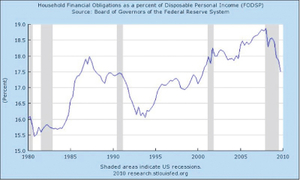 After a year and a half of misery, things are looking up for the Canadian and U.S. economies. The stock markets are up over 70 per cent from their lows of March 2009, both economies put out five per cent annualized growth rates in the last quarter of 2009, and consumer spending is on a tear. In Canada, consumer spending rose at a four per cent annualized rate in Q4 2009 and in the U.S., spending was up 1.6 per cent month to month in March, including a whopping one per cent due to sales of autos and parts alone. Economists and governments are now debating the sustainability of such encouraging results as they plan monetary and fiscal policy for the year to come.
PIIGS (Portugal, Ireland, Italy, Greece, Spain) II and the Greek crisis
By Robert Elman on April 23, 2010
Angela Merkel, Chancellor of Germany is being confronted with some very difficult choices. Does she participate in an active bailout of Greece and incur the wrath of the German electorate or does she commit German funds, and possibly save the EU from collapse. For a collapse of the EU means the disappearance of the once mighty Euro.
A Conservative Budget
By Robert Presser on March 25, 2010
 The game changing 1995 federal budget slashed transfers to the provinces and set in place five years of spending restraint. The resulting limited growth in federal government spending, coupled with falling interest rates that reduced the interest burden on Canada’s existing debt, allowed the federal government to move into surplus before the millennium and post a decade of surpluses which ended in 2009. The great shame of this period of fiscal nirvana is that it could have been even better for the Canadian taxpayer. The Liberals consistently under-estimated their surpluses and even after an orgy of last-minute spending in the final quarter of every fiscal year up until their defeat in 2006, they still exceeded their surplus predictions.
GREECE THE SKIDS
By Robert Elman on March 25, 2010
The “Canary in the coal mine,” is Greece, but is there an “ Elephant in the room?” Greece, like most of the PIIGS (Portugal, Italy, Ireland, Greece and Spain) has spent in a profligate manner, and has been less than humble in its demeanour. As you will later read , Greece’s dealing with her partners have been brought into serious question.
Greece became a member of the EU in 1993 with the signing of the Maastricht Treaty. There were very clear stipulations regarding Debt to GDP, Capital accounts, deficit to GDP and so on.
Bubble, Bubble…Canadian Debt Trouble
By Robert Presser on February 11, 2010
 Canadians can rarely feel smug when comparing themselves to their US
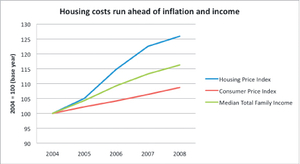
neighbors, but when it comes to our banking sector our airs of
superiority are justified. While the Obama administration contemplates
an overhaul of financial industry regulation and punitive taxation of
banking executives’ bonuses, Prime Minister Harper announced in Davos
that Canada has no intention of “micro-managing” Canada’s banks.
Canadians can rarely feel smug when comparing themselves to their US
neighbors, but when it comes to our banking sector our airs of
superiority are justified. While the Obama administration contemplates
an overhaul of financial industry regulation and punitive taxation of
banking executives’ bonuses, Prime Minister Harper announced in Davos
that Canada has no intention of “micro-managing” Canada’s banks.
Copenhague: Une grande douleur pour peu de gain
By Robert Presser on January 7, 2010
 Plutôt que d’analyser tous les détails de l’accord, l’objectif de cet article sera d’adopter une perspective à plus long terme fondée sur l’hypothèse que l’accord non-contraignant conclu à Copenhague doit être transformé en un accord contraignant et vérifiable pour la réduction des émissions à long terme. L’entente conclue entre les États-Unis, la Chine, l’Inde, le Brésil et l’Afrique du Sud contient des engagements pour que la réduction des émissions limite le réchauffement climatique à un maximum de 2 degrés Celsius, mais que veut dire cela en termes de vraies cibles ?
Do you know who the real bankers are?
By Robert Presser on December 3, 2009
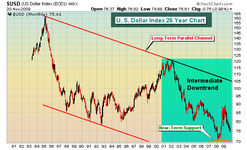 This year has been a seesaw for the Canadian Dollar. Plunging to the 80 cent USD range during the onset of financial crisis of 2008 and retesting those lows in March of this year, our currency has recovered to trade in a relatively tight range of 92 to 97 cents US over the past two months. The recovery in our dollar has paralleled the recovery in stock markets and commodities, especially oil. Sadly, Canadians don’t look at the broader currency picture – while our Loonie is stronger against the US greenback, the USD continues to fall to ever deeper lows against a broader index of international currencies. The US is pursuing a weak dollar policy despite public statements to the contrary and Canada is along for the ride.
Canada at the G20: power, but do we have a plan?
By Robert Presser on November 4, 2009
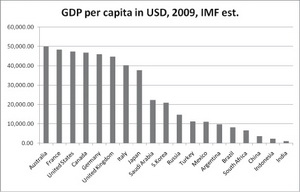 In 1976, French President Valery Giscard d’Estaing decided that it would be a good idea to invite the leaders of the major western economic powers (Canada, France, Germany, Italy, Japan, the United Kingdom and the United States of America) to an informal summit at a chateau outside of Paris to discuss their current common economic problems, giving birth to the G7. Later expanded to include Russia (G8) this intimate grouping of world powers dominated the international economic and trade agenda until the Asian currency crisis of 1997 had ripple effects around the world, making a broader consultative forum a priority to encourage cooperation with the developing world. That body was christened the G20, and today it represents nearly 85% of worldwide economic output (GDP) though 90% of the world’s countries are not at the table.
Are we as good as we think we are?
By Robert Presser on October 1, 2009
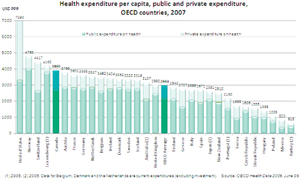 According to the latest statistical data, the Canadian recession ended
sometime over the summer and we will see slow growth in the third and
fourth quarters of 2009. While this is likely to be a jobless recovery
until sometime in 2010, Canadians believe that our conservative banking
culture coupled with greater financial market regulation spared us the
mortgage melt-down and destruction of consumer wealth that devastated
other first world economies. While that may be the case, it does not
mean that Canada is perfect on all major economic and government policy
issues. This article takes a look at some major issues facing western
economies and what international organizations like the World Bank have
to say about Canada’s success in managing them.
According to the latest statistical data, the Canadian recession ended
sometime over the summer and we will see slow growth in the third and
fourth quarters of 2009. While this is likely to be a jobless recovery
until sometime in 2010, Canadians believe that our conservative banking
culture coupled with greater financial market regulation spared us the
mortgage melt-down and destruction of consumer wealth that devastated
other first world economies. While that may be the case, it does not
mean that Canada is perfect on all major economic and government policy
issues. This article takes a look at some major issues facing western
economies and what international organizations like the World Bank have
to say about Canada’s success in managing them.
Lack of regulation you say?
By Mischa Popoff on October 1, 2009
Some claim the global financial crisis was caused by a lack of
regulation. But it was overregulation and community activism that
caused the American mortgage crisis which precipitated the global
financial meltdown.
The American mortgage industry is overseen by Freddie Mac and Fannie
Mae. They are roughly equivalent to our Canada Mortgage and Housing
Corporation, the big difference being that unlike CMHC they participate
directly in the mortgage market. Now hold that thought…
An older society does not mean a poorer one!
By Vincent Geloso on September 2, 2009
Economists, pundits and public policy makers have been trying to convince us for sometime now that the economy will soon face a very difficult challenge: that of an aging population. The concern is two-fold. As Canada’s new grey-haired population retires, the labour force will shrink thus slowing down economic growth. A recent study by the Caisses Desjardins in Quebec declared that the “growth of potential GDP (the economy’s long-term average growth rate) would drop substantially by 2021”. The problems is that the rising share of Canadians above 65 years old who consume services will rise from 13.7% in 2006 to 23.4% in 2031 according to Statistics Canada. Some provinces like Quebec could get close to 30%. Thus there will be more elders for every worker left. Globe & Mail columnist Jeffrey Simpson concluded from similar studies that “government finances will weaken: few tax revenues, more spending, chronic deficits, more debt. Health-care and education budgets will be squeezed”.
Statistical recovery masks suffering millions
By Robert Presser on August 6, 2009
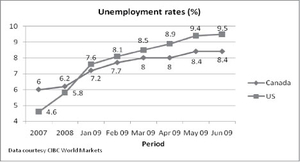 One could be forgiven for being optimistic these days. The stock markets are up 30% from their lows of March 2009, even taking into account the recent correction; housing starts and new home purchases showed surprising strength in Canada in June; job losses in the US and Canada seem to be slowing; lower mortgage rates and gas prices have freed up cash in consumer’s pockets and allowed more people to keep their homes; auto sales seem to be bottoming out
No value in paper-based organics
By Mischa Popoff on August 6, 2009
I’m the first and only organic inspector to blow the whistle on the organic industry. My story was first covered by The Western Producer and then picked up by the CBC, CTV, Maclean’s and Barron’s. I paid a high price for going public, but it was the right thing to do.
Now comes news about a study by the London School of Hygiene and Tropical Medicine saying organic food is no more nutritious than regular food. The immediate response from top representatives of the organic industry has been that they never said organic food was more nutritious, only that it contains fewer harmful chemicals.
The Unintended Consequences of Buy American
By Robert Presser on July 2, 2009
Last October this column reviewed the possibility of a trade war between the US and Canada if Obama were to take the White House. While the exact form of the dispute was not known at the time, some form of economic nationalism was inevitable as the US rustbelt demanded payback for delivering the electoral votes required to secure a decisive victory in the Electoral College. Congress crafted a stimulus package designed to create US jobs related to infrastructure and manufacturing, and in their expedient haste to curry political favour with their constituents they created the Buy American (BA) provision that related to municipal investment projects...
Stimulate this! (DATE DE PARUTION 5 FÉVRIER 2009)
By Beryl Wajsman on June 18, 2009
The current frenzy of economic stimulus packages sweeping around us like so many forest fires will not — and more importantly, should not — work. The reasons are threefold. First, they are stimulating the perpetuation of a false economy that has caused nightmares for tens of millions. Second, the packages are based on outdated Depression-era models without taking into consideration today’s much different realities. And third, they provide insufficient protection to get people through the tough three to seven years that are to come...
Is debt the new slavery? (DATE DE PARUTION 15 MAI 2008)
By Anthony Philbin on June 18, 2009
The principles by which all western financial institutions are currently operated permit them to loan vast sums of money that they don’tactually have. This disconnect between reality and currency is a necessary evil if you posit that a growing economy is a healthy economy, but when the rules that control just how much the banks can pull out of their magic hats become lax or under-applied, there are some very real implications both for the health of society and the freedom of its borrowers...
Government’s misguided attempt to end the economic cycle (DATE DE PARUTION 13 NOVEMBRE 2008)
By Robert Presser on June 18, 2009
Late last week, General Motors and Ford announced a combined third quarter loss of $7.2 billion US. In other years, this would be considered catastrophic as an annual loss figure, but in the current economic context it was expected since new car purchasing in the US has fallen to a 25 year low with no sign of immediate recovery. GM has put its potential acquisition of Chrysler on hold and now all three major US automakers are appealing to the US government for $25 billion in low interest loans on top of the $25 billion handout they were previously offered for retooling their product lines...
La relance économique ne passe pas par l’État (DATE DE PARUTION 18 DÉCEMBRE 2008)
By Jean-François Minardi on June 18, 2009
Le modèle québécois donne depuis un certain temps déjà des signes d’essoufflement. Ces problèmes sont aujourd’hui comme hier : un État trop interventionniste, une fiscalité trop lourde et une législation du travail qui fait obstacle à l’embauche de travailleurs jeunes et talentueux...
The Next Phase of the Banking Crisis
By Robert Presser on May 28, 2009
Relaxing the mark-to-market rules means we will never know what the banks are really worth
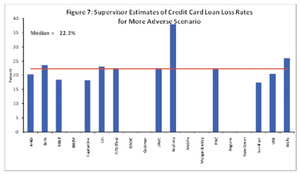 The Federal Reserve’s stress test results are in and to no one’s surprise, all the big US Bank Holding Corporations (BHCs) passed. Getting a passing grade in the stress test, more formally known as the Supervisory Capital Assessment Program (SCAP) was a lot like getting a passing grade in gym class – just because everyone gets by, this does not mean that all the subjects are equally capable and robust. The SCAP report indicates that 10 of the 19 largest US banks should collectively raise an additional $75 billion USD in tier-one capital in order to bolster their reserves to face a protracted recession. The report outlines the various types of assets held by the banks, including toxic assets like securitized mortgages, commercial loans and mortgages originated in-house, consumer loans and revolving credit card debt.
China Targets Canada!
By Robert Presser on May 6, 2009
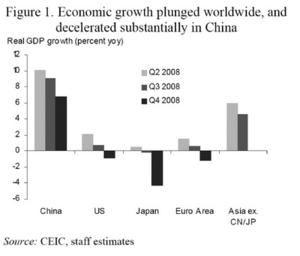 International Trade Minister Stockwell Day has returned from a goodwill trade tour of China making all the right gestures and remarks; a commitment to fight protectionism, two new Canadian trade offices to promote our goods and services in China, and kind words for Chinese officials in an effort to improve bilateral relations. There is even talk of a visit by Prime Minister Harper at a later date, a change of heart from his failure to attend the 2008 Olympics...
Stressing the banks!
By Robert Presser on March 19, 2009
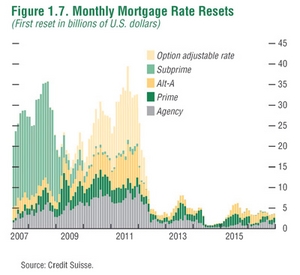 Investors around the world could be forgiven for expressing some optimism given the stock market results for the week ending on March 13th 2009: US markets posted the biggest gains in twenty years, with the Dow up over 9%, with similar gains on the broader S&P 500 index and the Canadian TSX. One of the catalysts for this surge of optimism was an announcement by Citigroup that after receiving $45 billion in government assistance, the bank was able to post an $8 billion dollar profit in their current fiscal quarter...
Surfing the Kondratieff Economic Long Wave
By Robert Presser on February 26, 2009
As the world collectively suffers the hangover of economic excesses propagated by excessive debt, greed and deregulation, many wonder if all or any of this could have been avoided. Fans of Nikolai Kondratieff will tell you that this era of falling prices, deleveraging of excessive debt and increased unemployment was both predictable and unavoidable. We are suffering through the Winter, or final season of an economic long wave that lasts from forty to sixty years, and that we can expect that it will last for years to come...
Quel avenir pour l’agriculture québécoise ?
By Jean-François Minardi on February 26, 2009
L’agriculture québécoise est étouffée par un certain nombre de politiques publiques mal conçues qui ne servent en définitive ni les intérêts des agriculteurs, ni celui des consommateurs, ni celui des contribuables. ..
Madoff’s Montreal effect
By Jessica Murphy on February 26, 2009
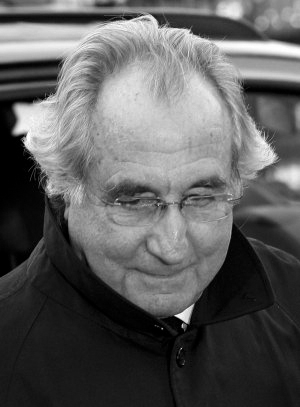 Among the victims of Bernie Madoff's alleged Ponzi scheme were a number of prominent Canadians, including former Westmount resident Phil Robinson.
Robinson, part-owner of the Gray Rocks and Mont Blanc ski resorts, lost about $4 million to the accused Wall Street swindler, according to a report by The Globe and Mail newspaper. His extended family lost upwards of $13 million...


