


All articles
Sorted by published date
"Décapitons" sans pitié la bête immonde islamiste!
By Amb. Freddy Eytan on July 9, 2015
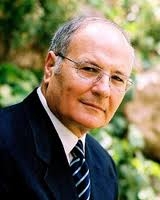 La dernière escalade de violence dans le Sinaï, les combats sans fin en Syrie, au Yémen et en Irak, les vagues interminables de réfugiés terrorisés fuyant l’enfer, les terribles attentats en Tunisie, en France, et au Koweït, les images effroyables de noyade et d’asphyxie de non musulmans enchainés, et les dernières décapitations notamment à Palmyre, par des citoyens islamistes européens, devraient secouer l’Occident et tous les hommes de bonne volonté.
Et pourtant, rien n’arrête l’horreur, la barbarie se poursuit de plus belle, voilà déjà plus d’un an.
Nous assistons chaque jour, dans la panique et le désarroi, comment des barbares assassinent aveuglement et avec le sourire tous ceux qui ne font pas partie de la mouvance islamique. Comment ces vandales saccagent et détruisent le patrimoine culturel de l’Humanité.
Politeness is…..
By Beryl Wajsman on July 9, 2015
 So, Premier Couillard defends his decision to table legislation requiring French descriptors on trademarked English store names by characterizing it as “protecting basic politeness” to francophones. Some media commentators have actually bought into this transparent disingenuity. We thought it might be worthwhile to provide him with a list of what civil politesse – politeness – really should be about.
Politeness is….respecting the rule of law and abiding by the decision of Quebec courts that descriptors are not required.
Politeness is….not expanding Bill 101 which itself protects trademarked names from the application of the language laws.
Signs of Privilege
By Jeffery Vacante on June 23, 2015
As the venerable Canadian department store The Bay continues the process of rebranding into Hudson’s Bay, which is part of a plan to go upscale and thus to fit a bit more comfortably into the culture of a corporate family that now includes Lord & Taylor and Saks, one wonders how this change will affect the facade of the company’s downtown Montreal store on Ste. Catherine Street. Removing the old yellow “The Bay” lettering and replacing them with the longer “Hudson’s Bay,” or more likely, “La Baie d’Hudson,” won’t be a simple matter since the old signs fit perfectly inside the arched recesses that dominate the facade of that grand old red sandstone building.
SHOULD I HAVE FLUNKED BECAUSE OF MY CLASS SIZE?
By David T. Jones on June 23, 2015
 Washington, DC - The classic teacher student ratio has been said to be “Socrates at one end of a log and the student at the other end.”
Unfortunately, even in the time of Socrates, there were very few such teachers. And today one suspects there are none.
The educational bureaucratic effort is to get the most students taught by the fewest teachers. They hope that the students learn something and the teachers do not walk away from the process. Unionized teachers, however, seek to teach the fewest number of students with the shortest work day implicitly (if not explicitly) citing Socrates as an example.
The U.S. educational process has seen an interesting evolution.
A GLOBAL VILLAGE GATHERS ITS URBAN LEADERS
By Father John Walsh on June 23, 2015
 The human being is a work in progress. The human narrative is being re-written. “Human” means many things to many people. Hat’s off to Mayor Denis Coderre, Mayor of Montreal, for inviting 30 mayors of the cities of the world to a Summit in Montreal to address the theme, Living Together. Humans living together. No person is an island and communities are made up of diverse individuals from a variety of traditions, languages, cultures, religions, secularists and atheists. Diversity is a treasure to be opened and shared by all humanity. Diversity is ubiquitous. Our streets and our neighborhoods are a microcosm of the diversity found in the entire world.
Alberta’s Notley is saddling up on a stranger’s horse
By Robert Presser on June 23, 2015
 I write this column as I return from the Global Petroleum Show that took place in Calgary, Alberta. The trip, as part of a Quebec delegation exhibiting and holding supplier meetings at the show, allowed me to gauge the reaction of a segment of Albertans (read, oil patch executives) to the recent election of the province’s first NDP government, lead by Rachel Notley. The comments I am going to share with you are a rather pleasant surprise, given the chortling and dismissive amusement displayed by many columnists in the mainstream media in the election’s aftermath.
First, there is no panic. From a taxpayer’s standpoint, there is general acceptance that the Alberta portion of the income tax will increase for anyone in the upper middle-class and above.
À la défense de l'enseignement bilingue
By Frédéric Hébert on June 23, 2015
Il existe au Québec depuis bien des années une sorte d'apartheid linguistique au niveau de l'accès à l'éducation primaire publique bilingue. Il demeure anormale que seules les communautés d’expression anglaise du Québec ont accès à ce système d'enseignement, au détriment de la majorité d’expression française du Québec. Lorsque je parle d'écoles publiques bilingues, je fait spécifique référence aux écoles publiques anglaises qui offrent des programmes d'enseignement bilingues où le français occupe un temps de classe variant entre 50% et 90% de l'horaire régulier. L'accès à ces écoles reste évidemment le privilège des communautés d’expression anglaise du Québec.
Le but du boycott est de délégitimer Israël et haïr le Juif
By Amb. Freddy Eytan on June 12, 2015
Jérusalem - Israël s’alarme à juste titre contre le boycott car il prend une ampleur sans précédent et constitue une menace réelle sur l’avenir de nos relations économiques, académiques, culturelles, sportives, et politiques. Il ne s’agit pas seulement d’une opération mondiale bien organisée et structurée qui a pour but d’exercer des pressions pour qu’Israël se retire des Territoires mais d’une campagne bien huilée et mensongère à des dimensions internationales discriminatoires et dangereuses.
Il est légitime de critiquer la politique d’un gouvernement mais comment lutter contre l’antisémitisme quand l’incitation à la haine à l’égard d’Israël et des Juifs prend des proportions incalculables dans le cadre de la globalisation et de l’Internet.
Delightful Dreykop: The Apprenticeship of Duddy Kravitz: The Musical
By Alan Hustak on June 12, 2015
 Comparisons are odious. Books are not movies. Movies are not stage plays and Broadway musicals are something else altogether. The Segal Centre’s production The Apprenticeship of Duddy Kravitz, the musical, which had its run extended into July even before it opened, stands on its own as a fearless, reimagined version of Richler’s classic novel. Even Richler’s widow, Florence and eldest son, Daniel who were at the opening approved. But it is a show with limitations, not so much a musical as a play with music. You keep waiting for a signature show tune, an anthem to hum as you leave the theatre, but there isn’t one. Eight songs into the first act, a song and dance routine, Art and Commerce, encapsulates the spirit of the evening and finally kick starts the show.
A NEW LOW FOR THE OQLF "SEGREGATION NOW, SEGREGATION FOREVER?"
By Beryl Wajsman on May 25, 2015
 "Someone, somewhere in the bowels of the OQLF bureaucracy wants to impose a home-grown version of Alabama Gov. George Wallace's rallying cry in the 1960s of,"Segregation now, segregation forever!" No it is not a stretch to make this parallel. It is actually perhaps time to stop being politically correct about what is "normal" in Quebec. Segregation of people by color is not "normal." Segregation of ideas and words in the press by language is also not "normal."
Lily Ryan is the publisher of the Pontiac Journal, a free weekly, home delivered to a bilingual community. It is an English newspaper. But in an effort to serve all members of her community,Ryan began publishing articles and ads in French some years ago. The only French community paper, Le Réveil, had closed in the 1980s.
Stop the prohibitions! We have a right to be human!
By Beryl Wajsman on May 15, 2015
Well, prohibition season is upon us and in full swing.
What seems to be an at least yearly event, perhaps corresponding to the weather, is in full throttle at provincial and municipal governments. Politicians find it easier to prohibit first, question later, than concentrating on getting the basics right. It is an appeal to the base politics of fear and a perpetuation of the lie that life can be legislated into what David Taylor Jones has called the “zero-risk” state.
This kind of politics is wrong. It infringes on Charter rights and natural justice. And worst of all it treats us all like children. The essence of a free society is just that – freedom - to speak as we like, to choose as we like…even if they are bad choices.
Alan Borovoy: Permanent liberty is the ultimate value
By Julius Grey on May 14, 2015
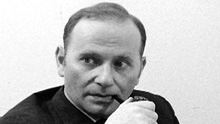 The death of Allan Borovoy deprives Canada of a unique voice speaking in favour of liberty, but without the constraints of political correctness.
The human rights industry in Canada has often shown undue deference to fashionable causes, whatever they might be for the moment. Allan Borovoy, long-time president of the Canadian Civil Liberties Association, never let himself be swayed by fashion. As a lawyer, writer and activist, he put individual liberty first and in particular defended freedom of expression, which is always under attack. Unfortunately, Canadian human rights activists are all in favour of freedom of expression, but not when their favourite cause is at issue.
I Did Not Have Sex Ed In Elementary School
By David T. Jones on May 14, 2015
I didn’t know that I could have two mothers.
Nor did I know that my little sister could have two fathers.
Indeed, I didn’t know (at age four) that my mother was pregnant, and when my sister appeared in our apartment and I viewed her diaper being changed, I asked with naïve ignorance, “Where’s her little ‘gigger’?
Yes, I also assumed until about age 10 that “the stork brought me” or that “you were found under a cabbage leaf”—both then-prevalent circumlocutions for the messy reality of sex and birth. To be sure by that age such nonexplanations were wearing a bit thin.
The Iran nuclear deal and American history
By Robert Presser on May 14, 2015
So much has been written in the past several weeks on the terms of the P5+1 deal to curtail Iran’s nuclear program. To summarize, proponents of the agreement believe that this was the best deal possible under the circumstances and that the West retains the ability to reinstate sanctions or undertake military action if Iran abrogates its commitments; opponents of the deal doubt that the verification process is adequate and lament that Iran’s nuclear research program and facilities remain intact. Both sides arecorrect in their assertions; it is unlikely that Iran would sign a more restrictive deal and the provisions of the current agreement will indeed allow Iran to continue essential efforts to develop its nuclear program with a view to building a bomb after the deal expires some 13 years from its ratification.
V-E Day 70 years later: Pounded on the anvil of history
By Beryl Wajsman on May 4, 2015
 "The pounding those heroes took on the anvil of history produced the steel that is the stuff of legend. We have an obligation to honor that legend and live up to that legacy every day and in every way. There remain obstacles to storm today that will hold us loyal to that purpose. The beaches of injustice. The cliffs of oppression. The marshes of apathy. We must be standard bearers of compassion and conscience. That would be the living proof that the sacrifices of 70 years ago were not wasted."
The Need For A Liberal Arts Education. It's About Being Human
By Father John Walsh on May 2, 2015
Every once in a while someone delivers a commencement address to graduates that makes you sit up and notice. A recent address by Fareed Zakaria, at Sarah Lawrence College, the quintessential liberal arts college, admitted that to speak about the liberal arts is not very cool. What you’re not supposed to do is get a liberal arts education … A liberal education - as best defined by Cardinal Newman in 1854—is a “broad exposure to the outlines of knowledge” for its own sake, rather than to acquire skills to practice a trade or do a job. However, the President of Yale, the late Bart Giamatti, asked in one of his beautiful lectures, “what is the earthly use of a liberal education?” Zakaria says it teaches you how to write.
Okill Stuart. One of the greatest generation
By Alan Hustak on May 2, 2015
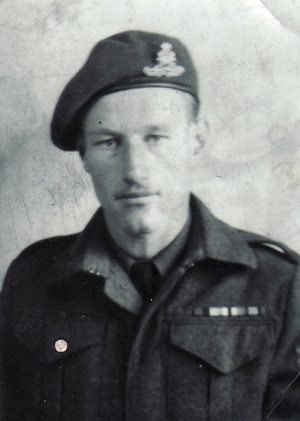 Okill Stuart was with the 14th Canadian Field Regiment, Royal Canadian Artillery, at a command post a few miles into Germany 70 years ago, when the war ended. The regiment had just swept through Holland and was on its way to Berlin when it was told to cease fire. ‘We were expecting the end, then we got the news the war was over,” recalls Stuart, “The Americans were the army of occupation, we weren’t. They pulled the Canadians out the next day and hauled us to Utrecht. There was no way we could all get back to Canada at once, so while we were waiting in Utrecht, we found a yacht club where the Germans had been relaxing a few weeks earlier, picked up cigarettes and bully beef, and we went sailing to celebrate war’s end. With a bit of bribery, we never ate better in our lives.”
I WAS A FREE RANGE CHILD! Let's end our "zero risk" mentality.
By David T. Jones on May 2, 2015
 Washington, DC - Currently, in the United States, a widening number of states have laws and regulations addressing “child neglect” that require intensive monitoring of children for a significant part of their lives.
The proximate example is Maryland where police seized a 10-year-old and a six-year-old walking home from a local park approximately a mile from their home. Maryland law says a child must be eight years old to stay home alone, and a child must be 13 years old to baby sit a younger child.
The result has been a new level of confrontation between “helicopter” parents (most recently epitomized by a man that had a drone to monitor his child’s progress to school) and “free range” parents who believe that children early on should be taught independence and given an opportunity to exercise such.
Federal Budget 2015: Winning Conditions or Not?
By Robert Presser on May 2, 2015
 Joe Oliver probably never imagined that his first budget would be delivered late and under the dual pressures of an election campaign on the horizon and falling revenues from oil royalties as a serious constraint on spending promises. Without the sudden passing of Minister Flaherty in 2014, Oliver would have been an unlikely candidate for the job of finance minister at all.. He came to electoral politics late in life after a long career in business and finance, arguably well equipped to handle the job – it’s just that the government’s front bench is mostly under 55 and it is rare that a 70 year-old gets the most critical economic portfolio at the cabinet table.
Suffering seniors - the sham of social security: Living on a pension in the Pointe
By P.A. Sévigny on April 27, 2015
 At 79 years old, Kathleen Brown keeps a neat and orderly apartment with all the usual details that includes lots of pictures of both her children and her grandchildren on the refrigerator along with the local grocery-store’s Christmas holiday calendar on the kitchen wall.
“I don’t get anything done for free like other people do,” she said. “I’ve been paying bills for all of my life and I expect to keep on paying them till I’m dead and gone.”
The Armenian Genocide
By Harry Dikranian on April 26, 2015
 Last Friday marked the centennial of the Armenian Genocide. Those two words, “Armenian Genocide,” are usually not capitalized, except in the minds and hearts of its survivors. Very few are alive today. But for their descendants around the world, the Armenian Genocide is a rallying cry for more than remembrance.
What happened on April 24, 1915? Ottoman Turkish soldiers carried out a centrally planned executive order to gather the Armenian minority’s elite. Over 250 political, professional, religious and business leaders were brutally marched into exile to the Syrian desert or simply killed.
Triplex Nervosa: Mischievous Mile-End Mystery
By Alan Hustak on April 26, 2015
 A wonderful confection of cock-eyed characters are at the heart of Marianne Ackerman’s dark hearted comedy, Triplex Nervosa that’s playing at the Centaur until May 17. Written on her kitchen table on a weekend, Ackerman’s play involves the trials and tribulations of a Mile End landlord, Tass Nazor (Holly Gauthier Frankel) who owns a heavily mortgaged triplex in Montreal’s trendy crunchy granola neighbourhood. She is in dire straights and needs to rid herself of a rather forlorn tenant, Max Fishbone (Howard Rosenstein), who has moved into his son’s apartment and won’t move out. The action begins with Tass suggesting to her rather sinister Slavic handyman Rakie Ur, (Karl Graboshas), that he take care of her problem by subjecting Max to some sort of “invisible damage.”
Wacky Wilde Travesty: The Importance of being Eccentric.
By Alan Hustak on April 23, 2015
 Travesties, Tom Stoppard’s intellectual exercise about the literary and political co-ordinates of art and Oscar Wilde playing at the Segal Centre until May 3 Is a polished, but exhausting three hour excursion into the surreal.. Unless you are familiar with the origins of Dadaism and the cabaret Voltaire in Zurich, know something of the precious personality of James Joyce and have studied Vladimir Lenin’s revolutionary ideas, this scholarly, highbrow drawing room comedy isn’t always easily accessible.
There is much, much more going on in on in this chaotic production as well. It is overloaded with talk, much of it too clever by half, and demands a familiarity not only with Wilde’s play, The Importance of Being Earnest, but with Shakespeare, Gilbert and Sullivan and early 20th century European history.
Thursday’s Israel Rally. Why it matters to us all
By Beryl Wajsman on April 20, 2015
 Thursday at 11 in the morning, over 10,000 Montrealers of all faiths and backgrounds will march from Phillips Square to Place du Canada to celebrate Israel’s independence. It is important to all of us – as members of the family of free people – that we be there. Here’s why.
If the Jewish people – in its national as well as religious manifestation - is the “canary in the mineshaft of history,” a phrase regularly employed by historians, then Israel is the litmus test of the ability of western civilization to survive. It is the frontline member of the family of free nations facing the existential challenge of Islamist fundamentalism. It may very well be that as Israel goes, so goes the west.
Bombardier payment puts government priorities into question
By Taylor C. Noakes on April 19, 2015

On Thursday April 2nd 2015 there was a large anti-austerity protest in Montreal. Several hundred kilometres to the northeast of the city, at the Bombardier plant in the small Kamouraskan town of La Pocatiere, Quebec’s economy minister, Jacques Daoust, declared that if the province were truly in a state of austerity it could not issue a $31.5 million advance payment for new Metro trains.
Perhaps the students, teachers, nurses and diverse other public sector workers didn’t get the message, as apparently austerity had been overcome since the release of the budget on March 26th. Reported total budget cuts amounted to more than $700 million, with healthcare and education taking the hardest hit as anticipated.
The "Other" Israel. Upcoming conference showcases "Start-Up Nation"
By Charles Bybelezer on April 19, 2015
 In some ways, Israel is indeed what many have been conditioned to see: A conflict zone.
Directly to the north is Syria, whose civil war has left more than 200,000 people dead and terrorist groups manning the Golan Heights along Israel’s border. Next door, Lebanon is run by the Iranian proxy Hezbollah, the leader of which has encouraged world Jewry to immigrate en masse to Israel, as the concentration of Jews there would make it easier to dispose of them in one fell-swoop.
No rights without responsibilities
By Beryl Wajsman on April 16, 2015
 The latest student displays of arrogant self-indulgence, culminating in the UQAM riot, have been nothing other than thuggery. The same kind of criminal activity we witnessed in the “Red Square” period. Destruction of private and public property, intimidation of others trying to exercise their own rights, criminal trespass and a resort to the appropriation of the facades of terror when rioters broke up classes with faces covered.
What is beyond comprehension is why there is yet again a debate as to how these thugs should be treated? If they can be identified, charge them. If they can’t, then UQAM should use the student association fees to make up the damage. Including the destroying soft drink dispensing machine which some of the riot’s leaders would justify as an attack on global capitalism.
I Would Not Want To Be A Young Man Today
By David T. Jones on April 16, 2015
 Washington, DC - I am now certifiably an “old man”—well past social security age with a gray beard.
And, the sexual mores of today are so different than those prevailing when I was young that one wonders how a young man (often with his “brain” between his legs) is able to negotiate the minefields laying between his desire for sexual intercourse and acceptable female acquiescence in his desire.
Recently, an Internet Headline News article, ostensibly directed at Canadian athletes but applicable to all young men, displayed as part of its story a wall-mounted poster listing a dozen examples illustrating how and when “NO MEANS NO.”
Ted Cruz – crazy or not you have to pay attention
By Robert Presser on April 16, 2015
 Ted Cruz, the junior senator from Texas, announced that he is seeking the Republican nomination for President of the United States. You may not like Ted Cruz. Well, get in line, there are lots of progressive Americans ahead of you with that sentiment, never mind Canadian Liberals and NDPers, some Red Tories, and the list goes on. Don’t dismiss him with a slight of hand, however. Instead, pay very close attention to what he stands for and how he presents himself before the media. He is the best semantic communicator in a generation, knows his political and economic history backwards and forwards and is wicked smart.
On civil conservatism/ The restraint of reason over illiberal license.
By Beryl Wajsman on April 7, 2015
There are core belies of personal civil conservatism that drive my social activism and journalistic advocacy. Foremost amongst them is my concern that many of the approaches of today’s inappropriately named liberalism have supported the proposition that the state has an undisputed authority to impose a framework of imperatives that not only delineate and define how we should live but who we should be. Social engineering as statist faith has become too ingrained and is increasingly seen as central to “progressive” government doctrine. In today’s “liberalism,” Individual expression is to be moderated and sublimated to the supposed greatest good for the greatest number.
Olympic roof funding deserves a big, fat NO! Quebec needs to get priorities straight.
By Beryl Wajsman on April 7, 2015
Out of a $15 billion infrastructure envelope in the new budget we are seeing some ridiculous things. Worst among them is $220 million for the Olympic roof. Again.
It's nice to know that all our other problems have been solved. This useless expenditure comes on top of $400 million to the Beaudoin family for a needless cement plant in the Gaspé. And some $300 million for a phosphate strip mine in Sept Isles. Cement and phosphate prices have been plunging.
Alana's plea
By Beryl Wajsman on March 30, 2015
Although Mayor Copeman has already received a longer and far more detailed letter from Ms. Ronald, the following is an abridged and edited version, with Ms. Ronald’s permission, for the purpose of publication. It is a story of her trials and tribulations with the city's social housing bureaucracy. It raises critical issues of the tragedy of what our seniors on fixed incomes have to go through. They, who built our society, suffer needlessly because our governments have not met their fiduciary responsibility to assure that pensions are sustainable. By 2020, some 30% of Montreal's non-francophone population will be seniors. Close to 40% will have no other source of income than government pensions which are below poverty levels of $19,000 for a single individual. There is no more vital issue on the agenda of social justice than to right the wrongs to the most vulnerable among us. Former Finance Minister Jim Flaherty wanted to start increasing pensions two years ago. It is time to begin.
A Tempting Envelope
By Alan Hustak on March 28, 2015
 Not only do you have to care, but you have to care passionately about the way movies in English-speaking Canada are made to appreciate The Envelope, Vittorio Rossi’s “gibber about the Canadian film industry,” playing at the Centaur Theatre until April 19.
It’s a fascinating glimpse into the world of moviemaking but one which may leave many outside the theatre community a little bewildered. The Envelope is essentially a play about idealism, greed and artistic integrity - in Rossi’s rant, it is about “an industry that kills talent.”
Time for an economic «risque de tonnerre!»
By Beryl Wajsman on March 23, 2015
Thursday, Quebec unveils its new budget. It should have one critical, straightforward direction. Cut taxes. Cut bureaucrats. Restart our resource base. Other than these priorities, there is nowhere left to go and nothing left to take. Taxation is not a way to raise revenues. It is time for Quebec to stop pushing people and companies away.
I don’t say this just because the Godbout report last week recommended sweeping changes in Quebec’s tax structure. It was gratifying to read the Godbout Report state clearly and candidly that radical tax cuts are the critical necessary step to economic revival. But frankly, it is just common sense. And M. Couillard recognized that, in an interview with me in Feb. 2013 when he said, “We need a deep reform so that taking a job does not leave one in a worse net position than if they just remained unemployed.”
Quebec electoral commission still fails cities
By Robert Frank on March 23, 2015
 Rural/urban imbalance continues as Montreal stands to lose seat and Laval will not gain.
Although the Liberal government has embarked on an ambitious effort to fix the provinces finances, Quebec City has not yet moved to address the province’s democratic deficit.
According to the Quebec Electoral Commission, Montreal stands to lose a seat in the National Assembly and fast-growing Laval won’t gain any.
That’s because Quebec crams two-thirds more citizens into its urban ridings than the ones in the hinterland. Last week, the Quebec Electoral Commission said in a statement that urban ridings can contain 60,484 voters, while rural ridings need just 36,290 eligible souls to get the same representation in the provincial legislature.


