


All articles
Sorted by published date
Secretary Tillerson and he State of State
By David T. Jones on March 18, 2017
 Washington, DC - In recent media stories, there are floods of tears (some of the crocodile nature) regarding the degree to which the U.S. Department of State and Secretary Tillerson have (not) controlled U.S. foreign policy.
To an extent, this observation is accurate. Secretary Tillerson stands alone atop a bureaucratic pyramid of senior State Department officials of the deputy secretary, under secretary, and assistant secretary ilk that are empty. Or at least empty of specific designees selected by Tillerson and/or President Trump. They are filled by “acting” officials, essentially long-term civilian government employees and career Foreign Service Officers. Their political predecessors were defenestrated or made to feel sufficiently unwelcome that with their backs up against the wall, they read the writing thereon.
HUMAN DIGNITY, PUTIN AND THE TRUMP ADMINISTRATION
By The Hon. David Kilgour on March 3, 2017
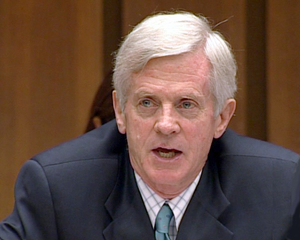 Ottawa - Across the world, in many nations with differing models of governance, it appears that human dignity is under siege.
In Asia, for example, medical agents of the party-state in China are beyond any reasonable doubt removing for commercial purposes an average of 250 organs daily, mostly from non-consenting prisoners of conscience in the Falun Gong, Uyghur Muslim, Tibetan Buddhist and house Christian communities.
Among the 54 nations of Africa, we find some of the world’s best-governed states, such as Botswana and Ghana, but also some, such as Zimbabwe and Angola, which are both mismanaged and corrupt and treat their citizens with thinly-veiled contempt.
Are we living in the 2nd or 3rd dimension now?
By Suzanne Reisler Litwin on February 28, 2017
 This past weekend I went to a party. It was an amazing celebration for a couple of friends’ birthdays. There was a dj, lights, and a photo booth. There were balloons, fabulous decorations and candies for the loot bag. The party was filled with festive people talking, sharing and celebrating the birthdays. It was a happy time to share with friends.
There were so many people engaged. However, the children at this party were faced downward, unaffected. They were all engaged with their mobile phones. They were messaging, surfing, emailing, instagramming, and snapchatting. What I noticed most is that they were not interacting with their friends. They were not dancing or paying attention to the actual party. They were virtually removed and living in their two dimensional world.
WHAT DON’T YOU UNDERSTAND ABOUT “ILLEGAL”?
By David T. Jones on February 27, 2017
Washington, DC - Language changes over time. Try reading Shakespearean plays without constant reference to explanatory commentary. Words take on new meanings. “Cute” once meant “short and fat.” Some words are transient—notably “slang” seldom lasts from one generation to the next (or even one year to the next).
Thus anyone still extant who would respond to “Twenty-three skidoo” is not of the current generation. Indeed, even the “It’s cool” of the 1950s-60s is long passé. When “pimp” arrived on the linguistic scene, it had a positive connotation—not a man running a string of whores.
But “illegal” still has a solid basis. If an action is illegal, it is contrary to the law and subject to official sanction. Killing is illegal; assault is illegal; theft is illegal. Trespass is illegal—or is it?
Le nouveau tandem Trump-Netanyahou
By Amb. Freddy Eytan on February 23, 2017
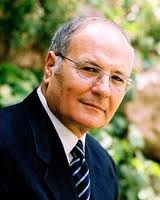 Jerusalem- La rencontre chaleureuse de Netanyahou avec le président Trump à Washington est à la fois symbolique et significative après huit années de tensions et de relations tumultueuses inutiles avec la précédente administration américaine.
C’est ainsi que le président des Etats-Unis devrait toujours accueillir un chef d’Etat ami et un allié fidèle. Sur ce point, Netanyahou peut en effet se réjouir et être soulagé. Enfin, il est entré à la Maison Blanche décontracté, la tête haute, et avec le sourire. Il est reçu sans contrainte, sans animosité, et obtient naturellement tous les égards.
THE DONALD MEETS THE JUSTIN—NO “BROMANCE”
By David T. Jones on February 11, 2017
Washington, DC - On Monday, 13 February, Canadian Prime Minister Justin Trudeau will meet U.S. President Donald Trump in Washington.
The likelihood of a “bromance” equivalent to that between President Barak Obama and Trudeau is akin to anticipating icebergs in the Potomac.
However, the president and the prime minister have some points in common: remarkable hair and wives more attractive than they.
Thus, we should not anticipate President Trump offering an official state visit to Trudeau (President Obama covered that base after denying former PM Harper the honor). Nor should we anticipate that Trudeau will propose Trump visit Ottawa to give an official address to Parliament.
TWO TO SEE: TRAILER PARK ANTICS AND A WONDERFULLY AWFUL ACT
By Alan Hustak on February 7, 2017
 Nicola Cavendish tears up the stage as Maude Gutman, the coarse, vulgar but far from stupid trailer park tootsie in Stephen Sach’s two-hander, Bakersfield Mist at the Centaur until February 26. The thought-provoking play spins on a simple premise: Maude has paid $3.00 for a large discarded canvas at a garage sale which may or may not be a Jackson Pollock drip painting worth millions.
Noises Off, Michael Frayn’s acclaimed sex farce at the Segal until Feb 19th, isn’t the easiest of plays to pull off. It’s actually a play-with-in-a-play.
Trump to America: "Did you love my huge, huge, first week?"
By Robert Presser on February 5, 2017
 Dear Americans,
I am doing Fantastic, I know you think so. I feel it, feel it clearly, no matter what the dishonest media is reporting. Spicer did an amazing job, totally amazing, Spicer was, standing up to the White House reporters, telling them that I had the biggest inauguration crowd ever, ever! Period! Way to tell’em! Spicer and I are going to get along great, great guy, Spicer is.
Obamacare is history, I made it so on day one, everyone saw me do it. I love executive orders, it’s just like running a business, sign the papers and make it so, but Reince tells me it is more complicated than that.
The Holocaust: On memory and witness
By Beryl Wajsman on January 27, 2017
 Today, January 27th, is the 72nd anniversary of the liberation of Auschwitz by Soviet troops. Perhaps for this reason, this date was chosen as International Holocaust Remembrance Day. Curiously, and sadly, it took the UN sixty years to give recognition to this most seminal and apocalyptic event in human history. The organization at whose entrance are carved the words of the prophet Isaiah that, “Swords shall be beaten into plowshares and nation shall not make war against nation anymore,” got around to commemorating Holocaust remembrance only in 2005. We are not only still waiting for Isaiah’s prophecy to be realized but also for that day when those other prophetic words “Justice shall roll down like waters and righteousness as a mighty stream…” have life breathed into them.
Quebec's problem with due process and the rule of law
By Beryl Wajsman on January 26, 2017
 "The means are all important. The means by which a society finds guilt or innocence is what determines whether it has a place at the table of civilized nations." ~ Justice William O. Douglas
Attorney-client privilege. Guilt beyond a reasonable doubt. Freedom of the press as the fourth estate of government. Confidentiality of journalists' sources. Pretty straight forward stuff right?Any tenth-grader in a civics class gets these. So why is it that so many Quebec prosecutors and judges not get it?
Marcus Aurelius and his Meditations
By Prof. Peter March on January 15, 2017
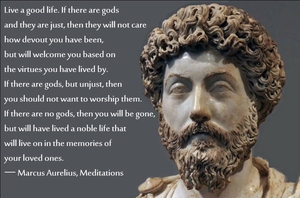 It is difficult to write this little piece. My chest bursts with the desire to weep for sudden memory, uninvited shame, and long regret. Making myself write it, well, that is an exercise Aurelius would have demanded of me. So I will try to be a good Stoic. In his way.
I first read Aurelius in Gorsebrook School Elementary when the principal, Mr.Moser read a little journal which I put up on the blackboard each morning before school. That would be in Grade 6 and I was twelve.
YAHYA AND ALI: TWO HEROES WHO MADE ME CRY TODAY
By Beryl Wajsman on January 4, 2017
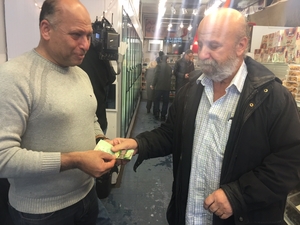 This made me cry today. We live in a time when too many cannot bear to confront in themselves the realities of this thing called life. They refuse to reflect on the true purpose of our own fleeting existence, much less our own inevitable mortality. It's too sad for them. The resolve we can demonstrate that defines a life of purpose, is too difficult for them. Most can't be bothered. They hide behind veneers of false illusions and ascribe unwarranted importance to ungracious consumption, childish games and purile entertainment. Rare is there appreciation for true beauty, thought, love. Rarer still are there examples of personal engagement to bind up the wounds around us. Character, fidelity, caring are too often scorned as weak. A corroding cynicism has pervaded our everyday life and our everyday relationships.
THE U.N., ISRAEL, OBAMA, AND KERRY
By David T. Jones on January 2, 2017
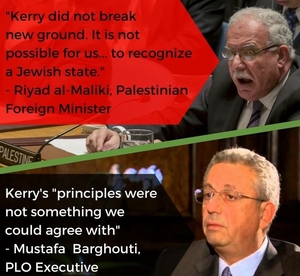 Washington, DC -The Thesis: The Second Coming will arrive before peace in the Middle East. The Corollary: Nobody ever lost money betting against peace.
For close to a generation, ever since the historic Begin-Sadat agreements leading to peace with Egypt and the Rabin-Hussein accords and the peace with Jordan, the peace process has been frozen. It has not been for lack of trying and, indeed, following the 1994 Oslo peace accord, the ‘90s saw enormous efforts by the most skilled diplomatic professionals to bridge differences between Israelis-Palestinians-Syrians and other Middle East actors. At times President Clinton almost assumed the role of State Department’s Middle East action officer and seemed to meet the principal players more often than any other foreign officials.
Leonard: Of poetry and power...
By Beryl Wajsman on November 21, 2016
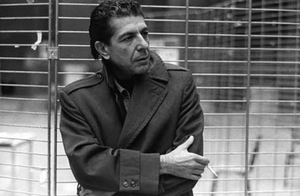 It has been written that we love so that we know we are not alone. The outpouring of love for Leonard Cohen this past week has brought all Montrealers together. In our grief, with pain falling drop by drop upon the heart, no one was alone here.
From the hundreds who stood in near freezing temperatures outside his now iconic greystone on rue Marie-Anne to the musicians who appeared - seemingly spontaneously - in various sites singing Cohen's songs to the artists painting canvas tributes. No one was alone. Love was in the air in this time of sadness. A love born in the poetic pathos of the words of this most gifted son of this island.
Remembering Leonard
By Alan Hustak on November 12, 2016
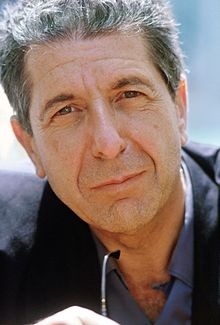 "You don’t know me from the wind/you never will, you never did,” Leonard Cohen wrote on the title track of his album, The Future, But that hasn’t stopped people who love his words and his mordant sense of humour from mourning the, poet, author and prince of mordant melancholy who died Monday Nov. 7 at the age of 82, three weeks after the release of his final album, You Want it Darker. His death was not made public until after the U.S. election was over.
Variously praised as “ the finest songwriter in America;” “the Lord Byron of rock'n'roll” , and as a mystic: "one of a tiny visionary company, the handful of rock or blues or folk singers who attempt to sort out the sense of the world with which they started."
Mapplethorpe finally arrives: MMFA mounts first Canadian retroapective
By Robert K. Stephen on November 12, 2016
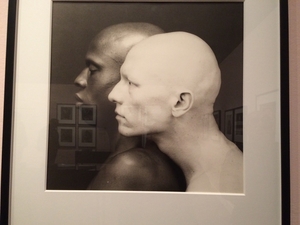 Robert Mapplethorpe (1946-1989) is perhaps one of America’s most iconic photographers. This first Mapplethorpe retrospective opened at Montreal Museum of Fine Arts on September 10th and runs until January 22, 2017.
You’ll walk away either somewhat disgusted with some of his kinkier nude or semi-nude photographs or view them as an innovative photographic attempt at sculpture. Or you may be in awe at some of his incredible photographs of flowers. As Mapplethorpe said, “I am looking for perfection in form. I do that with portraits. I do it with flowers.”Unlike the equally iconic American photographer Diane Arbus, Mapplethorpe preferred the studio portrait instead of the outdoor “realistic” method favored by Arbus. Does this make Mapplethorpe a traditionalist despite the progressive and innovative crown granted by the artistic community to Mapplethorpe?
Lessons from the American election
By Robert Presser on November 12, 2016
I write this barely 17 hours after Donald Trump’s acceptance speech at the New York Hilton, so emotions are still raw all around. Protesters are in the streets in seven American cities, urban voters expressing their frustration at his unexpected victory. America’s progressives should not be so surprised – the African American and Latino vote participated less than in 2008 and 2012, and working-class white men and women voted more for Trump than they did in those previous elections. Trump won the White House with fewer votes than John McCain and Mitt Romney received, but the overall participation rate was down, which favours Republicans. Therein lies the first lesson of national campaigns – energize your base and make sure they turn out.
The Strangest Election
By David T. Jones on November 4, 2016
 Washington,DC-It took me considerable time to appreciate just how strange this presidential election has been.
Being enough of a historian to recognize that finding something new under the sun is unlikely, I recalled the seriously dirty elections of the past and the ad hominem commentary that characterized them.Thomas Jefferson accused of having sexual intercourse with his slaves.Andrew Jackson characterized as a wild man from out of the West who would militarize the United States. Jefferson denounced him as “one of the most unfit men I know for such a place. He has had very little respect for laws or constitutions. He is a dangerous man. "
Atwood opens Atwater Library’s campaign
By P.A. Sévigny on November 1, 2016
 Although there’s always a good crowd at the Atwater Library’s regular Lunchtime Series events, it’s always a special day when Margaret Atwood drops by to offer up her own opinion about what Shakespeare was thinking when he wrote ‘The Tempest’: his play about a play that talks about what a grind it is to put on a play.
“Shakespeare’s Ariel wasn’t a magician,” said Atwood. “He’s a director and the (play’s) director is always the man who makes things happen!”
Au revoir, Le Mas des Oliviers
By Robert Presser on October 29, 2016
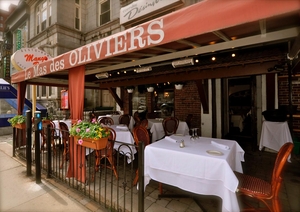 There are restaurants around Montreal that were anchors of my youth, all gone but certainly not forgotten by those of a certain age. I remember lunches at the Brown Derby with my best friend, Bernie Hyams, dinner at Pumpernick’s after my grade school graduation, watching Magic Tom at the Beaver Club at the Queen Elizabeth hotel, and the list goes on. These restaurants were gathering places for clients of many generations, ethnic and linguistic backgrounds, and they mingled in these locales as if they were public squares. Le Mas des Oliviers on Bishop was one of those restaurants where the business community mixed with politicians and notables at lunch and dinner, and for forty years owner Jacques Muller and his crew served them timeless French cuisine in a ground level location that mixed Norman Conquest décor with Quebec charm and grace.
Healthcare: Reforming the reforms
By Beryl Wajsman on October 29, 2016
 CIUSSS West End Director Dr. Lawrence Rosenberg's suggested reforms of our new health agencies could have an important positive impact for the English community of Montreal. Rosenberg has proposed that Montreal's English healthcare institutions - in the West End, West Island and MUHC agencies - be merged with regard to establishing a seamless flow of information and communication as well as easing the ability of doctors to have input on their patients regardless of which of the hospitals in the English stream their patients may be treated at on any particular occasion.
Mosul will fall. Who’s in charge then?
By Robert Presser on October 24, 2016
 After months of threatening to move against ISIL in Mosul, 25,000 Iraqi army and Kurd militia fighters are slowly closing in, supported by US and coalition airpower and advisors. Two years ago, Mosul collapsed as Iraqi forces fled the city when faced with a confident and insurgent ISIL force that had seized vast territories in Iraq and Syria and established Raqqa and the capital of the “Greater Syria” originally promised to the Arab armies by Lawrence of Arabia. Two years later, Mosul is the last major Iraqi city in ISIL control and their expulsion will leave only Raqqa as their urban stronghold. It will be a long, tough battle, brutal for the remaining 1 million civilians in the city, half of its pre-conflict population. It may take longer and produce more casualties than expected for the Iraqis and Kurds, but after the victory who’s going to get the spoils?
Tripping Through A Parallel Universe: Constellations
By Alan Hustak on October 7, 2016
 Constellations, the Centaur’s season opener running until October 30th is an existential exercise that is almost as inaccessible as the theatre on St. Francois Xavier itself these days. The narrow street in front of the Centaur, like almost every other street in the city, has been ripped up. You have to make your way around barricades across planks and around heavy machinery to get through the front doors of the playhouse.
But the effort is worth it.
Shimon Pérès- Combattant pour la paix et éternel optimiste
By Amb. Freddy Eytan on October 2, 2016
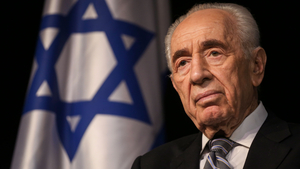 L’ancien Premier ministre et Prix Nobel de la Paix est incontestablement l’homme politique qui a marqué de son empreinte l’Histoire de l’Etat Juif depuis sa proclamation par David Ben Gourion jusqu’à nos jours.
Toujours dans le peloton de tête et au carrefour du destin de son peuple, il est le dernier leader israélien né avant la Shoah.
J’ai suivi durant cinq décennies la carrière de Shimon Pérès. J’ai eu le privilège de l’accompagner dans ses voyages et de pénétrer avec lui dans les arcanes du pouvoir et des chancelleries. Personne n’en doute, Shimon Pérès est un animal politique.
Dangers In Demonization
By David T. Jones on September 26, 2016
 Washington,DC - Donald Trump (Republican candidate for president) will debate Hillary Clinton (Democratic candidate for president) on Monday, 26 October.
It may be the most watched TV show in history (100 million projected viewers) rivaling Super Bowl figures.
And most eyes will be on Trump, perhaps the most reviled major U.S. political figure in modern history.
And we all know Trump. Bullying, bombastic, bigoted, racist, male chauvinist. He sneers at cripples; mocks menstruating females; endorses torture; believes that “blue lives” (police) matter more than black; is hostile to immigrants of all variety, but particularly illegal immigrant Hispanics described as replete with rapists—as well as taking jobs from honest U.S. citizens.
A Republican Secretary of State – Whoever Wins
By David T. Jones on September 20, 2016
Washington,DC ~ The current focus in the United States is on the day-to-day campaign vagaries of the candidates in the presidential election and in particular the upcoming debates (one in late September and three times in October). Foreign policy will feature in the debates and the campaign, although for the moment it seems to have boiled down to loving or hating Putin and hating ISIS (but unsure how to kill it off). There is much more in play, notably the fate of trade agreements now in effect (NAFTA) or prospective (TPP); the North Korean nuclear threat; containing/relating to China in every particular, notably Beijing’s effort to make the South China Sea a personal lake; our relationship with NATO and other allies; and if/when/where to put “boots on the ground.” Any one of these problems could become incendiary crises before election day.
Random thoughts of a non-dog owner (In no particular order)
By Dr, Mark Grossman on September 19, 2016
 I am neither a dog lover or hater. I cried when Old Yeller died. Underdog was one of my childhood heroes.
But when I am invited to your house please have a person, and not your dog, answer the door. I do not like being pawed, barked at and sniffed in my nether regions in your vestibule, prior to be granted free passage into your home. I won’t object if you try to sniff me.
Please do not expect me to go onto the road so your dog can remain in the passing lane of the sidewalk. Do not assume that I wish to interact with your dog when out on my evening stroll. I will engage and babble in baby talk If I want to have some dog time.
Message to Millenials
By Jill Salomon on September 19, 2016
 I'm so glad that I was born in 1961. I am a product of my time. A time of rebellion against a raging war in Vietnam. A time of loving love and wanting peace - but really wanting it. Meaning it. Woodstock and the free love movement. Colors and nature and coke ads where they wanted us all to teach the "world to sing".
When Bell wanted us to "reach out and touch someone." When there were four movies that we watched each year on one televisio. -(The Wizard of Oz, Mary Poppins, The Sound of Music, It's a wonderful Life) - and it wasn't an HD big screen. You may have even had rabbit ears on top of that television for better reception. (For the millenials, you can google "rabbit ears.")
Ottawa's plain packaging cigarette proposal: Illogical, illiberal and illegal
By Beryl Wajsman on September 19, 2016
 There have been many over-the-top actions by governments in their wars on tobacco, but few have been as illogical, illiberal and illegal as the proposal by Ottawa to enforce uniform plain packaging on cigarette packs accompanied by grotesque pictures of diseased organs. It doesn't work, breaches fundamental liberal principles of free expression and infringes trademark protections. Worst of all, it will cost us money that the government will eventually take out of our pockets.
To begin with, tobacco is a legal product and smoking is a legal activity. For those who are concerned that smoking puts a strain on our health care costs here are the real numbers.
PEACEKEEPING? MAKE HAITI THE PRIORITY NOT AFRICA
By David T. Jones on September 11, 2016
Washington, DC - Canada is contemplating a return to “peacekeeping.” The Liberal government’s concept of peacekeeping falls into the “we’re not Stephen Harper’s Tories” category of avoiding expeditionary military activity such as Afghanistan like the plague. There is even the thought that Canada-the-Peacekeeper will get more votes when seeking a seat in UN committees.
But if there is some vague amorphous concept of once-upon-a-time peacekeeping which featured the equivalent of civilians in military garb, “back to the future” will prove a bitter and perhaps bloody comedownance.
56,59,74... The numeric markers of Quebec as a failed state
By Beryl Wajsman on September 1, 2016
 No, the numbers in our headline are not the combination to a safe nor the secret winning numbers for a Loto draw. They are however numeric markers of a society moving to the status of a failed state. They are the numbers of Bills being presented and studied for passage in Quebec's National Assembly this fall.
You have all heard the term "failed state." It usually refers to an oppressive regime. A state where there is often sectarian violence. Where the institutions of government have stopped functioning, other than to press their heels onto the necks of the people. A state where the economy is in tatters and essential services cannot be delivered. A state that taxes its citizens to the point of ruin. And finally, a state that passes rule and regulation meant to control, command and coerce.
THE TRIUMPH OF THE NOSEY PARKER
By David T. Jones on August 19, 2016
Washington, DC ~ Politics is now in the phase of “let it all hang out” and, if there is reluctance to such exposure, rip it out of the recalcitrant.
Thus the endless clarion calls for politicians to release their federal tax returns. Ostensibly, these demands are couched in dulcet “good government” terms designed to reveal whether certain financial claims by a candidate are accurate or that income is honestly obtained. “Transparency” is the new buzz word.
In truth these demands are hypocritical and self serving. They are emphasized by political opponents who suspect that published tax returns will provide further grist for derogatory attacks.
Munich Massacre commemoration at Rio Games may be too little, too late
By Beryl Wajsman on August 15, 2016
 Forty-four years after the Munich massacre, the 11 Israeli athletes murdered by Palestinian terrorists at the 1972 Olympics were finally commemorated in an official International Olympic Committee ceremony last Thursday at the Rio Games. The ceremony was held at a memorial site in the Olympic Village. Called the Place of Mourning, the site honors the memory of the Israelis as well as four other people who were killed at Olympic Games. The others are the German policeman who was killed in a failed rescue attempt in Munich; two victims of a bombing at the 1996 Summer Olympics in Atlanta and a Georgian athlete who died in an accident at the 2010 Winter Olympics in Vancouver.
We can't let Quebec eliminate Mount Royal riding
By Beryl Wajsman on August 8, 2016
Every few years, particularly after a census, the Quebec Electoral Commission studies our provincial ridings to determine whether new boundaries may be necessary given changes to population. But this year, one of Quebec's faceless bureaucrats, has suggested not just changes in boundaries, but studing the possibility of eliminating one Montreal riding altogether. That riding is Mount Royal.
The provincial Mount Royal riding rests between D'Arcy McGee and Outremont. What is being studied would split Mount Royal's citizens between those two ridings and shunt part of Outremont's residents into Mercier riding.
Céline
By Beryl Wajsman on August 8, 2016
 Ok, confession time. I haven't seen Céline Dion live in twenty years. But when a lady named Brigitte tells you she got the tickets and asks, "So Wajsman, you going?" Well, you go. Now, at least half of you will be saying to yourselves, "Who cares Wajsman! Get back to the problems we all have!" You would be wrong. As I tell a lot of activist friends, if tomorrow, all the problems of the world were solved, we would still need art and music and poetry and passion. Céline Dion delivered all that and more. It wasn't just a concert. It was a mesmerizing, seductive, singularly unique outpouring of talent laced with the maturity and authenticity that is only born out of pain. This is not just a "Queen of pop" as she is too often flippantly labeled.


