


All articles
Sorted by published date
What's the endgame for Syria?
By Robert Presser on January 17, 2016
 As we were celebrating the new year, the United Nations adopted a resolution proposing a roadmap and negotiations to end the Syrian civil war and create a climate of stability that would end the refugee crisis that uncomfortably invades our TV viewing every night. All the major players involved in the conflict were on board; the US, Russia, Saudi Arabia, Turkey, Iran, even relatively uninvolved China expressed support. No one asked ISIL what they thought about losing their caliphate, but no matter, the others plan to degrade and destroy them in any case. This was a major step forward in engagement, but there are serious barriers to this initiative ever producing even a shaky peace. It is, however, a feel-good start to what will probably be another disappointing year for the region.
The Mark Blandford tragedy... M. Barrette, we need medicine not manslaughter!
By Beryl Wajsman on January 17, 2016
 The Oxford dictionary defines manslaughter as "the crime of killing a human being without malice aforethought." The tragic death of Mark Blandford, due to government restrictions on St.Mary's Hospital's allowable medical procedures, brings our current crisis into even starker relief. Bureaucratic miasma has morphed into bureaucratic manslaughter. How many other deaths have been, and will be, caused by it?
The government claims that the written directives disallowing surgery for emergency aortic aneurysms at St.Mary's - the condition Blandford died from - had not been sent out in written form. But it admits that the verbal discussions had been made clear since July.
Knowing the price of everything but the value of very little. The tragedy of La Presse' closure
By Beryl Wajsman on December 31, 2015
After 130 years, the daily La Presse has ceased weekday hard-copy publication reverting to its digital platform only. The Saturday edition will still be printed. This is a societal failure on multiple levels.
Marshall McLuhan was right when he said that the "medium is the message." But part of a medium - and media - being effective, is that it must be "in your face." We cannot rely on people choosing to go to digital platforms to be informed if we want to keep a healthy democracy. The essence of a healthy democracy, where citizens are not lulled into passive acceptance of pandering political sound bites and fleeting electronic images so often manipulated on social media, is that they have a chance to be deeply informed. Without an educated populace we have only a pretense of liberty with the uninformed electing the unchallenged.
And Who Will Vet The Vetters?
By David T. Jones on December 6, 2015
 Washington, DC - There is a classic, albeit cynical, observation recounting an exchange between officials.
Official One: We have all of the facilities guarded.
Official Two: But who will guard the guards?
In short, the historical illustrations of dishonesty and corruption are manifest. The creation and installation of inspectors, auditors, overseers, etc may well reduce blatant corruption. But who will be watching these “watchers”?
And, from this reality to the exercise of “vetting” Syrian and other refugees seeking admission to our countries.
On the Syrian refugee issue
By Dr. Sima Goel on November 25, 2015
 In light of Prime Minister Trudeau’s recent announcement that Canada will integrate over 25,000 Syrian refugees into our democratic and free country, I, a former political refugee have a message that I would wish to share.
In 1983 as an 18 year old I found asylum in Canada. I endured a harrowing escape from Iran and many months of life as a refugee in Pakistan. I was scarred by a lifetime of racism and political instability. I was obliged to go into hiding when I was sixteen, after a series of seemingly unrelated events brought me to the attention of the Islamic Revolutionary government, with the result that my name was put on a blacklist. My crime?
Bill Morneau, stimulate me!
By Robert Presser on November 25, 2015
 On Friday, November 20th Canada’s new Finance Minister, Bill Morneau, issued an accounting update on federal spending and revenue projections through March 2016, the end of the fiscal year. His presentation was largely based on estimates tabled by the Parliamentary Budget Officer earlier in the week, giving him non-partisan backing for his projection that the Conservatives’ $1.6 billion surplus in the first six months of the year will morph into a projected year-end deficit of $3 billion. Given all the horrible news about ISIS attacks in Paris, Syrian refugee resettlement plans and the lockdown in Brussels, why should you care? The answer is that even these small variations in government projections will have a major impact on the Trudeau government’s ability to make good on its campaign promises.
Remember Paris and Strike Back
By David T. Jones on November 25, 2015
 Washington, D. - Once again terrorists have struck. And around the world, starting with France, citizens are defiantly cringing. They wait for the next shoe to drop and fear that the Islamic State (ISIS) is a centipede. They stampede in panic when hearing firecrackers at a memorial rally. Colored lights proclaim “Vive la France” (just as “We are all Charlie” in January).
French President Francois Hollande declares the terrorism in Paris was an “act of war,” and France will strike back. Then French aircraft hit a couple of targets in Raqqa, an ISIS-controlled city in Syria. Pinpricks anyone?
Reality Bites in Paris
By Robert Presser on November 16, 2015
As I write this, the investigation into the attacks is ongoing in Paris and Brussels, links are being identified to a broader ISIS conspiracy for a wider range of attacks coordinated with the leadership of the caliphate in Iraq and Syria. Another attack was likely averted when a traveler bound for Paris was apprehended with a cache of TNT by French authorities. What distinguishes this series of attacks from Charlie Hebdo and the kosher supermarket was that they were directed at soft public targets that were not part of the media establishment, nor Jewish. These were acts of terror most pure, directed at the general public to create a sustained fear of congregating in public spaces.
Aujourd'hui, c'est une guerre pas un symbole
By Beryl Wajsman on November 15, 2015
 Les lombrics se sont glissés hors de leurs repaires une fois de plus dans les attaques brutales et barbares envers la liberté. Maintenant, il est une fois de plus le devoir de tous les peuples libres de se rassembler avec audace et détermination en exposant, en dénonçant et en détruisant la vermine qui commet une telle horreur afin que nous puissions débarrasser notre société de cette peste.
Nous pouvons vaincre le terrorisme et nous pouvons vaincre malgré la terreur. Nous pouvons bâtir des communautés de conscience qui — ensemble — permettront de venir à bout des puissantes sources haine et d'oppression. Parce qu'ensemble les gens trouvent le courage.
Paris terrorisée, Paris assiégée, Paris encore menacée
By Amb. Freddy Eytan on November 15, 2015
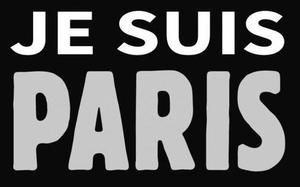 La série d’attaques terroristes qui vient de frapper la Ville Lumière nous plonge dans l’obscurantisme de la terreur djihadiste et nous rappelle l’horreur et l’effroi du 11 septembre américain.
Cette nouvelle vague était prévue car depuis le 7 janvier dernier, depuis les attaques contre Charlie Hebdo et le super-casher, les autorités françaises n’ont pas réussi à adopter des lois draconiennes contre le terrorisme. Certes des mesures ont été prises mais les effectifs et les budgets des forces de l’ordre n’ont pas été augmenté suffisamment et en priorité tous les services du Renseignement.
Black Friday: "Charlie was a symbol. This is a war."
By Beryl Wajsman on November 15, 2015
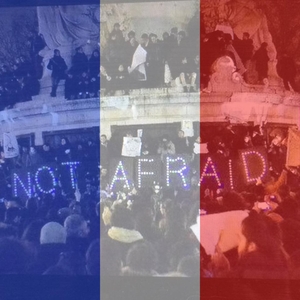 These words were spoken by French philosopher Bernard-Henri Lévy during the ISIS attacks on Paris. "Charlie était un symbole. Là, c'est une guerre," he said. Several hours later, French President François Hollande finally repeated what few world leaders have stated. "This is war," he declared. France's response would be "ruthless" he promised. There are lessons for every free nation in this.
ISIS has, over the past few weeks, demonstrated the capacity for military operations on multiple fronts in multiple operations against multiple nationalities.
Health care or homicide?
By Alan Hustak on November 8, 2015
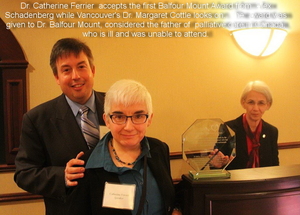 As Canada moves toward legalized assisted suicide starting in February, Quebec will jump the gun and become the first province to permit doctors to euthanize patients beginning next month.
When Quebec’s Bill 52 takes effect on Dec. 10, physician-assisted suicide will be deemed an acceptable health-care option which doctors may offer to certain terminally ill patients. Still to be resolved, however, is the question of whether Quebec’s law conforms to the Criminal Code of Canada, which makes it illegal “to help a person commit suicide, whether suicide ensues or not.”
A Pope and two Prime Ministers. Interesting times "In our times"...
By Beryl Wajsman on November 2, 2015
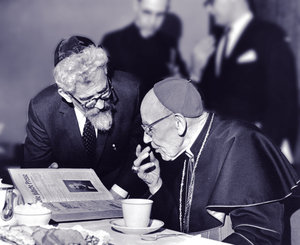 "To attack Jews is anti-Semitism, but an outright attack on the State of Israel is also anti-Semitism. There may be political disagreements between governments and on political issues, but the State of Israel has every right to exist in safety and prosperity."
Many have heard or read these words before. But never from someone of the stature who expressed them last week. This quote came from His Holiness Pope Francis himself.
The occasion was an event marking the 50th anniversary of the encyclical "Nostra Aetate" - "In our times" - issued by Pope Paul VI. The work was begun at the Second Vatican Council under Pope John XXIII who entrusted the supervision of the work to Cardinal Augustine Bea.
Changes they 'r a comin'
By Me.Linda Hammerschmid on November 1, 2015
 The powers that be have decided to modify, yet again, the Quebec Civil Code of Procedure [C.C.P.] which will come into effect January 1, 2016. So it seemed only fitting to let you in on a few of the more important changes and new arrivals in the domain fondly known as Family Law.
You should first be aware that every time a Government changes existing legislation, under the guise of making Justice more accessible and less costly, I shudder.
Les coups de poignard palestiniens
By Amb. Freddy Eytan on November 1, 2015
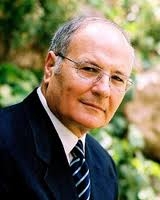 Jérusalem ~ Depuis plus d’un siècle nous affrontons dans notre pays des vagues de terreur. Ces vagues ont frappé sauvagement des Juifs et ont saccagé leurs bienspartout dans le monde avant même la création officielle de l’Etat d’Israël.
La « révolte arabe » a été toujours caractérisée par des émeutes à l’arme blanche contre des civils innocents résidents à Jérusalem, à Hébron ou à Safed. Ces « Intifada » sont déclenchées toujours par une incitation à la haine des leaders politiques et religieux. Ils propagent à chaque fois des mensonges grossiers et manipulent les foules en désinformant la réalité sur le terrain et les intentions réelles des gouvernements israéliens.
"In our time..." 50 years ago
By Alan Hustak on November 1, 2015
 Fifty years ago this week marks a dramatic turning point in relations between Catholics and Jews.
On Oct. 2 8, 1965, Pope Paul VI issued a ground breaking Vatican II declaration, Nostra Aetate (In our Time) which ordered Catholics “to enter with prudence and charity into discussions and collaboration” with people of other religions, especially Jews . It represents an historic condemnation of anti-Semitism and paved the way for ecumenical dialogue. In particular, it rid the church liturgy of its offensive language which for centuries had dismissed Jews as “perfidious."
Advice for Cabinet Newbies
By Robert Presser on October 28, 2015
Congrats, you got the call! Whether you are an experienced parliamentarian or part of the new wave of government MPs, being asked by the PM to sit in cabinet is a transformational experience in the life of a politician. Your success or failure is dependent on much more than just your intelligence, wit and talents. Here are a few things to consider as you prepare to walk into Rideau Hall on November 4th:
You are one of a select club of thirty or so cabinet ministers, but there are another 150 members of the Liberal caucus who are not in cabinet and probably a majority of them would have liked to be in your place. You are still a member of caucus, and these other Liberals are still your colleagues.
Syria, Russia And Reality
By David T. Jones on October 11, 2015
Washington,Dc - What the world is seeing in Syria is a painful illustration of politicomilitary reality.
Nature deplores a vacuum.
Politics is even less forgiving of vacuums.
And the West now has the opportunity to watch Russia, accompanied by Hezbollah and Iran, fill that vacuum.
It is difficult to characterize the reactions of observers—something akin to a betrayed spouse or a naïf who believed that Nigerian prince on the internet wanted you to assist him with his million dollar bank transfers
Ban the Bans!
By Suzanne Reisler Litwin on October 7, 2015
 Stop it! Just stop it! It's getting out of control! It's getting to the point that we can't live our normal lives without someone, some place, somewhere telling us you can't do something.
Smoking!
Ok, I get it. It's bad for your health. For this reason I don't smoke. I won't smoke. I made that decision for myself. I don't go to places where people smoke. That's my choice. But there are people who do enjoy smoking and that's their choice. Not mine, but theirs.
FAITH GLOWS AT THE CENTAUR: The Adventures of a Black Girl in Search of God.
By Alan Hustak on September 27, 2015
 The Adventures of a Black Girl in Search of God at the Centaur until October 18 is a riveting, highly theatrical excursion into the mysteries of life and death and the healing power of a faith community. At its core is the age old conundrum: How can a loving God allow bad things to happen to good people?
Djanet Sears, who wrote, developed and directs her own work engages us in a three hour fantasy of her making. Sears is a born story teller who has combined West African tradition with the fervor of an old time American gospel revival meeting to come up with an extravagant, vivid, and occasionally taxing, theatrical experience. The play explores the Black experience in Southern Ontario - present and future, and is rooted in the light of the past all the way back to the War of 1812, when Captain Runchy’s Company of Coloured Men fought for the British.
NEW “INCONVENIENT TRUTHS”
By David T. Jones on September 21, 2015
Wasington, DC - Former U.S. Vice President Al Gore made a name for himself (and snarfed up a Nobel Prize) with his “Inconvenient Truths” film. The film, although in retrospect fundamentally and irredeemably flawed, professed to convince viewers that “global warming” (or “climate change”) was a near term peril that would inalterably damage the earth and its inhabitants (flora and fauna both) unless dramatic, near term action was taken.
Essentially, viewers rejected the Apocalypse Today (or at latest tomorrow). They decided (correctly or not) that Gore was wrong, the data was skewered, the time lines were too long to worry about in a foreseeable lifetime, and/or there was nothing normal citizens or societies could do other than wreck their economies if they embraced the solutions.
A system “to die for”
By Beryl Wajsman on September 7, 2015
 It is 3.40 in the morning, Saturday, September the 5th as I write this. It’s the kind of sultry late summer night that Montreal famously seduces you with. Gentle, tangy breezes caress your face. Somewhere in the distance people are laughing. Elsewhere, there is the sound of a deep, soft saxophone bringing Coltrane’s “Night Train” to life again. I am savouring the first sips of Irish whiskey slither in their serpentine manner down my throat. I’m an Irish whiskey guy anyway, but tonight’s brand, “Writer’s Tears,” is particularly aptly named. Because I’m not drinking to top off what should have been an evening of passion and pleasure. I’m drinking to take the edge of a harrowing fourteen hours that could only have been dreamt of in the imagination of Franz Kafka on crack. Or been realized in the brutish, venal, petty reality that has come to define the daily combat between governors and governed in Quebec.
"The right to be let alone..."
By Beryl Wajsman on September 2, 2015
Elected officials need not all be lawyers. In fact, sometimes it is better that they are not. But all those who present themselves for election as lawmakers - at any level of government - must be familiar with the basic concepts of justice that are the foundation of our free society. If they are not, they do damage to the delicate fabric of our most basic civil liberties.
The decision of the city of Beaconsfield to install cameras on its garbage trucks is an example of such damage.
Report confirms taxes take greater bite than food, clothing and shelter combined
By Joel Ceausu on August 30, 2015
 If you're like most people, you probably suspected it all along, even joked about it come tax time, bill time, paycheque time, heck anytime at all. But the Fraser institute in its most recent report confirms it:
The average Canadian family paid more in taxes last year than for food, clothing and shelter combined.
According to the Vancouver-based think-tank, families spent $33,272 (42.1%) of income to the federal taxman and his provincial, municipal, and school board minions compared to $28,887 (36%) on basic necessities last year.
Iran's "Merry Minuet"
By Fraser Martin on August 23, 2015
 Around 1960 the Kingston Trio recorded Sheldon Harnick's satirical ditty "The Merry Minuet" which, while underlining the climate of discord and hate prevailing in the world recalls that mankind had been endowed with "the mushroom shaped cloud"and that someday inevitably someone will "set the spark off…..and we will all be blown away". We have just recently been given a stark reminder of the consequences of such action through images of the destruction, devastation and death wreaked upon Hiroshima and Nagasaki in 1945.
Bill 59: Our continuing problem with freedom
By Beryl Wajsman on August 17, 2015
I have written, sadly and far too often, of the institutions in Quebec that have sought to impose conformity and constraint on freedom of expression. It is a systemic illness. But today, in the midst of what should be a restful summer pause from political excesses, we are facing what may be the most serious threat yet. The Couillard government has proposed a law that would allow the Quebec Human Rights Commission (QHRC) to censor speech that promotes "fear of the other." The proposed law is Bill 59. Hearings are about to start. And it underscores once again Quebec's continuing problem with freedom.
The Buonanotte Affair: Massimo Lecas and Quebec McCarthyism
By Beryl Wajsman on August 14, 2015
Quebec seems always to be digging for new lows in its abuses of civil rights. In the latest instalment, the government is demanding that merchants enforce shunning of citizens. Yes you read it right. The Régie des alcools, des courses et des jeux (RACJ) is threatening to pull the liquor license of well known Restaurant Buonanotte unless its owner, Massimo Lecas, agrees to refuse service to a list of people the RACJ considers "undesireable." It's not the first time the RACJ has tried this. The other two times were also against Italian restaurants. Does the expression "ethnic profiling" resonate with anyone? What's next...blacklists to apartment owners and retailers not to rent or sell to those blacklisted?
WHAT IS POPE FRANCIS DOING?
By Father John Walsh on August 9, 2015
 People are often happy to scratch the surface of discontent and see little victories that offer hope. The major difficulty is that the problems created by any system require that the system be literally dismantled and sent to the sin bin, not the recycling bin. The bishop of Rome, as he refers to himself, signed the encyclical Laudato si, on care for our common home, Francesco or simply Francis. Why does Francis do what he does? To the first question posed to him: Who is Jorge Mario Bergoglio? He answered, I am a sinner and he added that he wished it were a verb “mercying” him all the time.
La bêtise des préjudices et la vengeance au nom de Dieu
By Amb. Freddy Eytan on August 9, 2015
Jérusalem ~ La mort d’un bébé palestinien dans un incendie criminel commis au lendemain d’une agression à l’arme blanche contre un défilé de la Gay Prade à Jérusalem bouleversent les esprits et plongent la société israélienne et ses dirigeants dans le dédain, le mépris et dans la honte collective.
Rien n’explique ces actes insensés revendiqués au nom de la Thora, du Messie ou de Dieu ! Ces attaques odieuses par des vengeurs juifs contre des familles palestiniennes, contre des mosquées et des églises, ou contre nos propres compatriotes homosexuels sont injustifiables et impardonnables. Les préjudices et la loi du Talion sont incompatibles aux valeurs universelles et démocratiques car contrairement aux peuples qui nous entourent, nous savons condamner fermement et arrêter les coupables !
CANADA, BETTER ONE HARPER THAN 16 REPUBLICANS
By David T. Jones on July 21, 2015
Washington, DC ~ In 1992 when I was preparing for my assignment in Ottawa as political counselor, I read many serious, academic oriented books and spoke with a wide variety of individuals in Washington with hands-on experience in Canada. I also had the good fortune to talk with counterparts in the Canadian Embassy.
During the process, however, I also encountered a little cartoon book, Son of a Meech: The Best Brian Mulroney Jokes, edited by Mark Breslin and published in 1991. A quick search of the Internet did not reveal it available for current sale. It was unique in its way; frankly, I’d not seen anything outside of straight pornography with such viciously crude humor.
La victoire de la diplomatie de l’autruche et le triomphe de la ruse iranienne
By Amb. Freddy Eytan on July 16, 2015
Jerusalem - Le 14 Juillet 2015 sera inscrit dans les annales comme un jour sombre pour le monde libre car les Ayatollahs sont entrés triomphalement dans le club fermé des pays capables de devenir un jour une puissance atomique.
En signant à Vienne un mauvais accord avec l’Iran, l’Occident abandonne ses principes et ses valeurs universelles. Elle l’a fait avec précipitation pour aboutir enfin de compte à un accord dangereux qui encourage la prolifération et le terrorisme et plongera toute la région dans une instabilité permanente.
The hypocritical criticism of Magic Mike XXL "It's reverse sexism,"says Andie MacDowell. "Women are in Charge!"
By Beryl Wajsman on July 13, 2015
 "We want our streets teeming with sensual echoes framed in smoky blue-grey hazes fueled by intoxicating spirits. We crave to hear the sweet murmurs of pleasure. We yearn for those breathless encounters on the precipice of peril and menace. Without all this, life would be nothing but a vast treadmill from birth to grave. Let's all be kids in a sandbox and act like 'boys and girls together' to borrow William Goldman's phrase, and suck the marrow out of the bones of this thing called life!"
I don't usually write about movies. But the criticism of Magic Mike XXL has reached the crescendo of a public issue. And, save for a few brave female commentators who admit liking the pure fun of watching male hunks and some great dancing, the general condemnation is breathtaking in its hypocrisy.
On Parizeau
By Beryl Wajsman on July 9, 2015
 To be frank we were thinking of not commenting on the passing of former Premier Jacques Parizeau. Enough has been written in our pages over the years. Our disagreements with him are on the record. Yet some of the outpouring of opinion on him in recent weeks ascribing so many achievements to him - so much nobility of purpose - demonstrated such a lack of intellectual rigour, so much pandering to political correctness, that we felt some perspective was in order.
Let's make justice for seniors a priority
By Beryl Wajsman on July 9, 2015
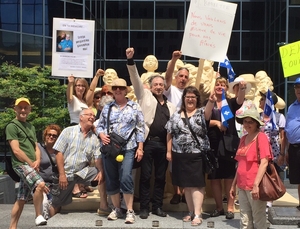 Jean Bottari has the type of face that lets you know what life is about. It reflects toughness, determination and pain. It's in his eyes. He's seen it all. And the handsome vigour of his face that younger men would envy, cannot mask what his eyes have seen and what they say. Bottari has spent much of his working life in the healthcare system. Specifically taking care of elderly patients in chronic care facilities. And he was revolted by the treatment of our seniors in our CHSLDs. He confronted authorities and organized and gave hope to his colleagues. But this kind of work takes its toll. He left his work pained in heart but not broken in spirit. Bottari decided to do something about it.
M. Couillard, time to end the suppression of expression
By Beryl Wajsman on July 9, 2015
The Couillard administration is failing in its promise to restore the dignity of all citizens on minority rights and constitutional protection of language. This failure will inevitably harm economic recovery as surely as the policies of the Marois government did. Appeasement of language extremists for political expediency, impotence or unwillingness to reign in the OQLF and the tactic of changing rule and regulation to thwart judicial decisions, is making Quebec look like nothing other than a banana republic.
We yearn for investors from outside Quebec to invest here. We know that foreign investment is critical to job creation and to increased bank credits for small business.


