
All articles
Sorted by published date
Running for the hills in the GOP? Not quite
By Robert Presser on January 29, 2018
 All the US administration’s 2018 optimism seems to have vanished in the face of Wolff’s inside look at the Trump White House, Fire and Fury, coupled with the threat of a new round of indictments from the Mueller enquiry that target more insiders. No worry, Trump is telling us that he can take the heat, and that he is prepared to take the heat for everyone involved. Fear not, skittish Republicans, Trump has your back!
With the mid-term House and Senate elections coming up in November 2018, incumbent Republicans must make two major related decisions.
The Holocaust: On memory and witness
By Beryl Wajsman on January 27, 2018
 “In our time, it is more important to be hard and relentless than genteel and unobtrusive.”
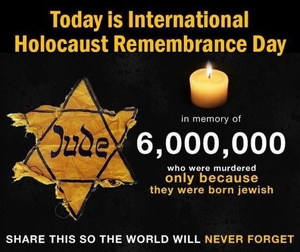
Today, January 27th, is the 73rd anniversary of the liberation of Auschwitz by Soviet troops. For this reason, this date was chosen as International Holocaust Remembrance Day. This year the World Jewish Congress has launched the #WeRemember campaign in the face of studies that have shown that half of young people in the west today have not heard of The Holocaust. Think of it. Half. Please share this.
The Malysa Affair: Compassion should be the only language of healthcare
By Beryl Wajsman on January 18, 2018
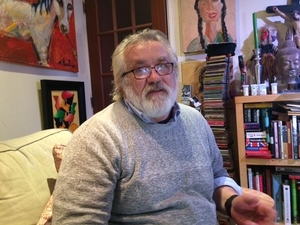 By now most of you have heard of the language prejudice suffered by Zbigniew Malysa when he went to the CHUM for some medical tests and was refused service because he asks to have things explained in English. His daughter Suzanne has done a remarkable job of bringing this unconscionable behavior to the public's attention. We offered her whatever support and intervention she and her father need, and will continue to help through the pricess of examination of the behavior of the doctor by the CHUM and the Human Rights Commission to whom she has made a formal complaint.
Couillard administration begins to discuss potential Universal Basic Income initiative
By P.A. Sévigny on January 18, 2018
 Although it’s presently considered to be among the most ambitious and progressive policy initiatives on the table, the Couillardadministration’s recent policy survey indicates that it’s going to take a while before there’s going to be any kind of a realistic discussion about a working UBI (Universal Basic Income) policy within Québec’s National Assembly.
While early reports indicate that an efficient and universal UBI policy could make a serious difference in the lives of the working poor, Simon Lejeune’s analysis of the Couillard administration’s recent UBI report describes at least 6 problems that must be dealt with before any government can realistically consider adopting a UBI policy.
NORTH AMERICA, JAPAN, INDIA AND THE TRANS PACIFIC PARTNERSHIP
By The Hon. David Kilgour on January 7, 2018
 Negotiating a free trade agreement with an increasingly totalitarian and plutocratic party-state in China, which treats its Tibetan, Falun Gong, Uyghur, Christian, farm, urban worker and other communities appallingly,should be unthinkable for any democratic country.
Canadian Clive Ansley, who practised law in Shanghai for 14 years until 2003, notes that its Communist party has long operated outside and above the law:
China is a brutal police state…There is a current saying amongst Chinese lawyers and judges who truly believe in the Rule of Law…: ‘Those who hear the case do not make the judgment; those who make the judgment have not heard the case’…. Nothing which has transpired in the ‘courtroom’ has any impact on the ‘judgment’.
Jerusalem recognition opens door to out-of-the-box solutions
By David T. Jones on January 7, 2018
 Washington, DC - After more than a generation of excavation in the Middle East, the US government has finally concluded that the hole it has been digging for the “Two State Solution” has no foreseeable “pot of gold” at the bottom. Nor, to mix metaphors a bit, does the room filled with manure have a pony in it as hypothesized by the little optimist.
So we have stopped digging (and closed the door to the manure pile). It was not that that “the two state solution” has not seemed both tantalizing and seductively attainable. It should have been Political Science 101 simple: a state for Israel. A state for Palestine. Land swaps transferring parts of Israel to Palestine to compensate for the major settlements constructed in the West Bank post-1967. And Jerusalem as the capital for both Israel and Palestine.
Quebec obstructs medicare portability and Ottawa does little to help
By Dr. Charles S. Shaver on December 17, 2017
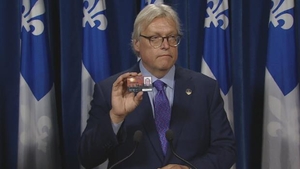 Hospital care is fully portable across Canada, but unlike all other provinces and territories, Quebec has refused to sign a reciprocal agreement for physician services. Quebecers seeking medical treatment in another province usually find that the MD refuses to accept their provincial health card. Instead they must pay upfront and wait for partial reimbursement (often only half of the amount paid) from the Quebec government. This affects three major groups of persons.
Quebecers may wish to visit friends and relatives in other provinces. Those with pre-existing conditions should not be deterred from travel for fear that they may develop an unexpected illness and face unaffordable up-front medical charges in another province.
Shame! Not one voice against the suppression of expression
By Beryl Wajsman on December 6, 2017
 Yet again in Quebec, we are living through more suffocating political hypocrisy and pandering to the worst elements of division and discord merely to cover the cowardly partisanship of elected officials. And as has become de riguer here, truth, equity and respect for civil rights be damned. It is not justice that "rains down like waters" from the National Assembly but words of "nullification and interposition" as Martin Luther King, Jr. once called the rule and regulation of institutionalized prejudice in the American South. And not one voice was raised in the Assembly against the latest installment of capitulation and appeasement. Not one voice.
Poor Morale at Department of State—Ho Hum
By David T. Jones on December 4, 2017
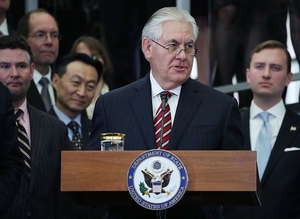 Washington, DC - In recent media stories, there has been a flurry of excitement among the fluttering class prompted by a State Department spokesman’s comment that morale is poor at State.
The announcement is as dramatic as “The sun rose in the east this morning” or “It was really hot and humid in Washington this summer.”
Drawing on 50 years of experience with State, both on active duty and as a retired officer, I can say that there has never/never been a period when one could say that morale at State was good, let alone excellent.
Who will watch the watchmen?
By Beryl Wajsman on November 26, 2017
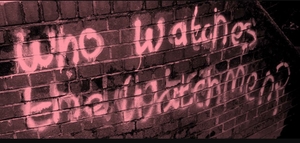 When UPAC was created, there were many who warned that setting up another level of policing - with extraordinary powers - was inconsistent with due process of law and could pose a threat to basic liberties. UPAC's arrest without charge of former senior SQ officer and now Laval MNA Guy Ouellette may have finally woken up those in power to the dangers of such a body.
Assembly Speaker Jacques Chagnon rose to give an extraordinary statement criticizing UPAC and saying in part that UPAC's action demonstrated, "...ignorance of our institutions, and in particular of parliament, which is at the very heart of the democratic governance of our State."
On Salman Rushdie
By Alecs Kakon-Grundman on November 19, 2017
 Having recently completed “A Sketch of the Past” from Virgina Woolf’s Moments of Being, I walked away from the recent talk by Salman Rushdie at the Jewish Public Library inspired. He was enigmatic, charming and incredibly funny. His staggering playfulness interspersed with witticisms about everything from Saul Bellow and Heraclitus to Trump and the challenges of journalism today were enlightening to say the least. He spoke of the intersection of the public arena with private life and how that plays a role in fiction writing and journalism, as well as politics and social responsibility. However, it was not those reflections that inspired nor touched me. It was not his gaze outward that allowed me to get to know him a little better, rather it was the moments between his speech, the moments when he glanced inward that opened a porthole into who the man behind the work truly is. So, who is Salman Rushdie?
The Church in Quebec - The challenge of asking why?
By Father John Walsh on October 1, 2017
 In the recent visit of the Catholic Bishops of Quebec to Pope Francis, Bishop Lortie of Mont Laurier, vividly and honestly described the Catholic Church in Quebec. He told Francis that the Bishops “are aware of the limits and poverty of our Church and we are looking for concrete ways to develop a missionary spirit in a Quebec that has broken its relations with the Catholic tradition and heritage and chooses to find its references elsewhere than the Gospel. In the present context being pastors of a small number, a little flock, we ask ourselves as pastors, how can we reawaken the faith, reveal the love and mercy of God, open hearts to the Gospel, invite people to conversion, create disciples … in a secular, pluralist Quebec that is often allergic to religion?”
Angela Merkel and the German election
By The Hon. David Kilgour on September 18, 2017
 Angela Merkel’s re-election as Germany’s chancellor for the fourth time on September 24 is important for Germans, Europeans and many democratic nations around the world, partly because of regional and other international misfeasance by Russia’s Vladimir Putin.
Strobe Talbott, President Bill Clinton’s leading adviser on Russia, observes, “Chancellor Merkel is the most steadfast custodian of the concept of the liberal West going back 70 years ... that makes her Putin’s No. 1 target.”
Merkel is the widely-recognized leader of Europe and defender of besieged universal values and democracy internationally. Putin is a contemporary would-be Russian czar, who wants to fracture Europe and democratic governance wherever possible.
À la recherche de la Ménora du Temple de Jérusalem
By David Bensoussan on September 10, 2017
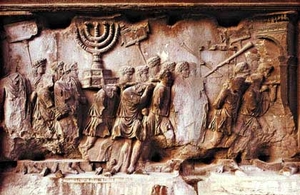 L’un des monuments les plus visités au forum à Rome est l’arc de triomphe de l’empereur Titus consacré par son frère Domitien pour marquer la prise de Jérusalem en l’an 70. On y trouve l’inscription : « Dédié par le Sénat et le peuple de Rome à Titus Vespasien Auguste, fils de Vespasien. »
Le butin pris au Temple de Jérusalem dont la Menora ou candélabre à sept branches y figure sur un bas-relief. Tout comme l’Arche de la loi contenant les tablettes des Dix commandements, la Ménora était conservée dans le Saint des Saints dans le Temple de Salomon.
Statuary rape
By David T. Jones on September 10, 2017
 Washington, DC ~ The current search for “feet of clay” throughout the United States is curious almost beyond puzzlement. We are self axle-wrapping over what statue should be permitted to commemorate whom and what.
And not just statues and memorials associated with the Civil War Confederacy “losers” but other historical figures who don’t fit 2017 parameters for veneration. These range from George Washington (slave holder); Thomas Jefferson (slave holder; alleged sexual relations with a slave); Benjamin Franklin (owned slaves); Teddy Roosevelt (violent expansionist); Woodrow Wilson (ignored racism and promoted segregation—and didn’t “keep us out of war” as he promised).
40 years of Bill 101: The legacy of narrow spirit
By Beryl Wajsman on August 30, 2017
 Forty years ago this past week - Aug.26, 1977 - Bill 101 became law. We all know the material damage it has done. The exodus of hundreds of thousands of anglophones and francophones. The departure of head offices. The giant sucking sound of foreign investments drying up and leaving. But we want to examine today the moral damage it inflicted. That perhaps is as much its lasting legacy as anything else.
Herb Paperman: Bringing conscience and compassion to community "A righteous, learned, man of deeds."
By Beryl Wajsman on August 7, 2017
 There is a discussion in the Talmud among a number of Rabbis on who we should stand up for when they enter a room. They decided on three types of people. The righteous, the learned and the people of deeds. Yesterday, Montreal lost a man who embodied all three. Herbert Paperman passed away at the age of 92.
Herb, as he was known to everyone, passed away as he had lived. Quietly, with dignity and surrounded by love. He was beloved by all, but it was right and just that his final hours in this vale were warmed by his beloved wife Leila and their family at his side.
Puzzling over hacking
By David T. Jones on August 2, 2017
Washington, DC ~ For an extended period now, Washington and President Trump’s administration have been wrapped around the axle over Russian “hacking” of Democrat-associated e-mails and Moscow’s alleged concurrent effort to assist the Trump campaign win the election.
The effort to “get to the bottom of it” does not seem anywhere near to reaching any bottom. Indeed, it has metastasized into investigations by Special Prosecutor Robert Mueller that appear to be casting their investigatory nets in ever-widening directions, ensnaring President Trump’s son and son-in-law as well as assorted odds-and-ends deal-makers/fixers/lawyers of one nationality or another.
The Kahdr settlement: A bodyguard of lies
By Beryl Wajsman on July 12, 2017
 Free nations in order to survive in liberty do not negotiate with, pander to or reward terrorists. This has been the keystone of policy among all western countries for decades. The Trudeau government's decision to settle Omar Khadr's legal pursuit against Canada for the alleged violation of his sec.7 Charter rights protecting the "security and liberty of the person" is shameful in principle, distorts the 2010 Supreme Court decision upon which the Prime Minister claims to rely on, opens the door to the compromise of the very Charter protections he seeks to defend and potentially blocks the ability of the widow of the man Khadr killed to obtain redress under the 2012 Justice for Victims of Terrorism Act that allows for the collection of damages from U.S. judgments in Canadian courts.
The Khadr Settlement: An Embarrassment to Canada
By Kevin Budning on July 9, 2017
 If there has ever been a time to question the integrity and moral compass of Justin Trudeau and the Liberal government, the time is now. A few days ago, news broke that Omar Khadr had reached a settlement agreement with the Canadian government that entails a formal apology and a $10.5 million payout. Apology and payout for what you may ask?
Well, Khadr - who at age 15 decided to move to Afghanistan to live with his father, a high-ranking Al-Qaeda member - believes he should be compensated for ‘wrongful imprisonment’ at Guantanamo Bay. In 2010, after allegedly being tortured, Khadr pleaded guilty to throwing a grenade that killed U.S. Special Forces medic, Christopher Speer, and for blinding another soldier, Layne Morris. It was this act that landed him in the notorious prison.
"BREXIT" after the British election
By The Hon. David Kilgour on June 26, 2017
 Emmanuel Macron, president of France, is correct about Britain’s post-election Brexit realities. At a joint news conference with Prime MinisterTheresa May in Paris last week, he said the UK decision to leave the EU could be reversed: “As the negotiations go on, it will be more and more difficult to go backwards...”
May knows she must respect the positions on Brexit of other parties, given her failure to secure a majority and the loss of 13 MPs. She is also under pressure from Brexiters on her own backbenches who could topple her as prime minister if she fails to deliver on their expectations. The world, however, knows that she and David Cameron - with good reasons -supported "Remain" in last year’s national referendum.
Dare to dream! Passion is not the enemy of reason. Fear is. Commencement 2017
By Beryl Wajsman on June 15, 2017
Many people will be graduating this month. They go forth at a time in history of great danger as well as great opportunity. They are surrounded by far too much sham and drudgery, but also by noble acts of selflessness and courage. Here are some thoughts for them, the class of 2017.
You will soon be leaving the comfortable world of academe for the much harder school of life. It’s waiting for you. Just there in the early morning. What you leave you should always remember. Keep these years of study and searching warm in your hearts, and remember the lessons of effort and striving. It is the truth you looked for. Never forget that goal in all your endeavors. It is pre-eminent of purpose.
NATO and the Transatlantic Relationship
By The Hon. David Kilgour on June 11, 2017
When 12 democratic governments seeking to check Soviet expansion formed NATO by treaty in 1949, it seems unlikely that any of their political leaders thought they would today number 28 and become the most successful defensive military alliance in history.
Post-1952 American President Dwight D. Eisenhower noted at the time, “We are engaged in a war of great ideologies. This is not just a casual argument between slightly different philosophies. This is light against dark, freedom against slavery…”.
The initiative represented a major turning point for the United States. Unprecedented in peacetime, Washington was entering a permanent alliance linking it to Western Europe in both a military and political sense.
THE SIX DAY WAR—ICONIC MILESTONE
By David T. Jones on June 7, 2017
Washington, DC ~ Four times in the 75 years of my life, Israel has had to fight its Arab neighbors: 1948, for the creation of the country; 1956, to restore freedom of navigation through the Straits of Tiran and the Suez Canal; 1967, in pre-emptive strikes against Arabs on the verge of their own attacks; and 1973, beating back a surprise Egyptian attack across the Suez Canal that was initially successful.
Each time there was the basic appreciation that Israel could not afford to lose a single war or “never again” would be implemented to catastrophic effect.
It is the 1967 “Six Day War,” now in its 50-year commemoration starting on 5 June, that has proved the most enduring and consequential.
"Masada shall not fall again! Metzadah shuv lo tipol!" The legacy of the bold and the brave
By Beryl Wajsman on June 4, 2017
 This week we commemorate the 50th anniversary of Israel's victory in 1967's Six Day War. A war pre-meditatively planned and instigated by frontline Arab states whose leaders promised to "drive the Jews into the sea!" It was a victory for the frontline nation in the family of the free, a precursor of the time of terror we live in today, but more than all that, it affirmed President John F. Kennedy's creed that with, "Resolve and courage, the bold and the brave can assure the survival and success of liberty."
In the weeks leading up to the War - a war that took place just 22 years after the liberation of the death camps of the Holocaust that killed 6 million Jews - Arab states flaunted international law and the international community responded with submission and impotent silence.
JFK:Why he matters still
By Beryl Wajsman on May 29, 2017
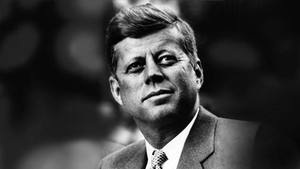 “When he shall die, take him and cut him out in little stars, and he will make the face of heaven so fine that all the world will be in love with night and pay no worship to the garish sun.” ~ Robert F. Kennedy quoted these lines from Romeo and Juliet upon the death of his brother....
Today we commemorate the centenary of the birth of John Fitzgerald Kennedy. Think of it. He could very well have still been with us. Think of the difference in this world if he had lived the vigorous and robust life he could have. Just over a half-century after his assassination on that terrible day in Dallas, his hold on our imagination does not wane. It is important to reflect on the reasons why.
CULTURAL APPROPRIATION IS A CROCK
By David T. Jones on May 28, 2017
Washington, DC - Sometimes one is impressed over the trivial pursuits of injustice collectors. (One of) the latest “viewings with alarm” has been the contretemps over “cultural appropriation.”
The intimation appears to be that the “culture” of a specific group is itself the equivalent of patent-protected material, and that nobody is permitted to act in a manner that reflects another member/group of society.
It is hard to imagine anything more absurd. History and society advance by the spread of ideas, inventions, and associated technology. Culture, not just biology, is constantly evolving. Otherwise, my Chinese mother-in-law would never have been permitted to read Shakespeare as a child. Or members of First Nations to use rifles while traveling on snow mobiles.
Le négationnisme de Marine le Pen et la responsabilité de la France
By Amb. Freddy Eytan on April 28, 2017
 Jerusalem - Le président Rivlin a eu raison de condamner le négationnisme de Marine le Pen au moment même où les Français s’apprêtent à voter au deuxième tour de la présidentielle. C’était son devoir d’alerter et de remettre les pendules de l’Histoire à l’heure de la vérité.
Certes, rares sont les déclarations prononcées par un dirigeant officiel israélien contre un candidat à une élection dans un pays étranger, mais comment ne pas sursauter et se révolter contre les tentations de blanchir le gouvernement de Vichy dirigé par Pétain.
Ce maréchal, vainqueur de Verdun, l’homme providentiel de l’époque, et ses collaborateurs,ont agi volontairement et ont offert aux Allemands une aide importante, la plus considérable et la plus précieuse de tous les pays de l’Europe occupée.
Quebec pockets $2.8 billion in Hydro profits and still raises rates
By Debbie Byer, Iocent Crammer, Aissatou Diallo, Maria Ines Garduno on April 23, 2017
 April 1st was a day of unpleasant surprises for many people across Quebec. On this day Hydro Quebec started cutting electricity to households that have not been able to keep up with their electricity bills. It was also the day when hydro hiked its rates 0.7 percent for residential consumers. This increase is not trivial for the dramatically increasing numbers of households that have fallen behind on their bill payments. While wages and government benefits have stagnated, the prices of food, rent, and other necessities have skyrocketed. That the cost of electricity, an essential service under the responsibility of a crown corporation, should have also outpaced inflation is outrageous and shameful.
Two Minutes to Midnight
By Robert Presser on April 23, 2017
 Since 1947, The Chicago-based Bulletin of Atomic Scientists has maintained a Doomsday Clock indicating how close they feel the world is to a global nuclear war. Now the clock is set to two and a half minutes to midnight, to which it has been creeping closer over the past 26 years since a recent low of 17 minutes, recorded following the collapse of the Soviet Union in 1991. I think that the clock does not reflect the current danger represented by the twin threats of the Syrian civil war and persistent belligerence from North Korea. There are more dangerous factors involved than at any other time since the Cuban missile crisis of 1962, the atomic scientists need to get together and tick the clock 30 seconds closer than their most recent setting of January 26th, 2017.
RUSSIA: SET/RESET/RESET AGAIN
By David T. Jones on April 23, 2017
Washington, DC - The United States has a “Russia problem.” (And to be sure, Russia has a “United States problem.”)
This is not “Cold War II”—much as media always in search of a conflict to which they can attach a tag line might prefer. The “Soviet Red Army” of the 1980s that we feared for a generation would crash through the Fulda Gap headed to the Rhine—where we would have to fight outnumbered and win for the West’s survival—hasn’t existed since 1989.
To be sure, Russia remains the only country whose nuclear strikes could comprehensively destroy the United States--at the cost of its own annihilation. But despite this disconcerting reality, we “trust the Russians” to continue to act in sane self-control over their forces.
Westmount: For community and for dignity
By Beryl Wajsman on April 6, 2017
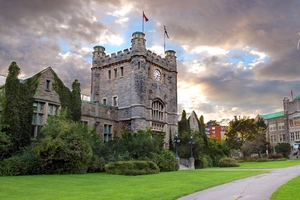 I want to thank the hundreds of you that have expressed your support and confidence as I explore a possible candidacy for the Mayoralty of Westmount. Most of you have been with me in so many of our efforts. The fight against Bill 14, battling the Payette Plan, advocating for seniors rights, helping strengthen our food bank network, protecting minorities from racist authorities, representing the vulnerable against state fiat and championing our Canadian civil rights in the face of institutionalized prejudice. Without your help I would not been honored with a Martin Luther King, Jr. Award from Rev. Darryl Gray, nor a Parliamentary Certificate for contributions to Canadian democracy from the Hon. Marc Garneau, nor a Queen's jubilee medal for community service from Sen. Leo Housakos. You've been at the barricades with me.
The dissolution of Mont-Royal riding must not be allowed to stand. We must respond to the "fierce urgency of now!"
By Beryl Wajsman on March 22, 2017
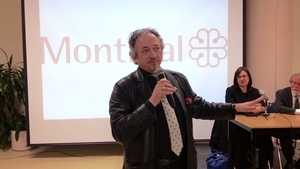 The decision of the Director-General of Elections to eliminate Mont-Royal riding cannot be allowed to stand. It is about the compromise of our most basic rights as citizens. It is about the disenfranchisement of our suffrage. It is about the second largest population of the economically vulnerable on the island not having a place to turn to. It is about anglophones and allophones losing a voice in our Assembly of law and legislation. It is about natural communities torn asunder with some moved into ridings represented by elected officials with neither the time nor understanding of their particular needs. It is a decision of egregious hypocrisy.
From Russia with Love
By Robert Presser on March 22, 2017
Did Russian President Vladimir Putin seek to influence the outcome of the 2016 US presidential election? More seriously, was there collusion between elements of the Trump organization and Russian insiders to shape the campaign, and did those interventions lead to the disclosure of damaging information on Hillary Clinton at critical moments in the closing months? FBI Director James Comey was summoned before Congress to testify and present evidence, or confirm the lack thereof so that these questions can be settled, at least on an official level.
The only bombshell of information he has provided so far was that the FBI has been investigating since July 2016 into contacts between the Russians and certain Trump campaign officials –clearly this cloud over the Trump presidency will endure for some time.
M-103 threatens freedom of expression
By Kevin Budning on March 18, 2017
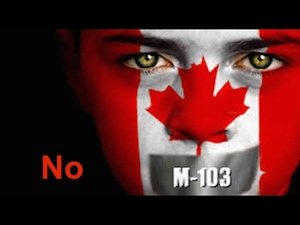 Ottawa - In February, Liberal MP Iqra Khalid introduced Private Member’s Motion M-103, which calls for the end of systematic racism and racial discrimination. The motion, which condemnsIslamophobia, while simultaneously omitting hatred towards all other religions, is inherently flawed. Here is why.
To be clear, the Conservative Party remains fully opposed to all forms of hate speech, racial discrimination, religious intolerance and bigotry. It is for those exact reasons the previous conservative government created the Office of Religious Freedom within the Department of Foreign Affairs. This office was tasked with protecting freedom of religion and belief internationally, as well as to promote Canadian values of tolerance and pluralism. However, in complete juxtaposition of this motion, the Liberal Government decided to shut the office down.