
All articles
Sorted by published date
Now the state "presumes" to control our deaths
By Beryl Wajsman on June 19, 2019
 It doesn't seem to stop does it? Government after government at every level just can't get it through their collective heads that their job is called "public service." Service. They are elected to deliver and ensure the essential services we the people that elected them need every day. Care for the vulnerable, health, transport, dignified and affordable housing, pensions, order and so on.
Tlaib, Omar and their apologists
By Henri Roth on June 19, 2019
 I understand that Jewish progressives have mastered the art of mental contortion in order to reconcile their political choices with the anti-Semitic mutterings of Democratic stars Ilhan Omar and Rashida Tlaib, but the usual rationalizations, distortions and cognitive dissonance of the apologists have reached a new low as some have sharply criticized — are you ready for this — not Tlaib’s repugnant comments but rather Republicans for having the gall to criticize this poor woman’s obviously heartfelt efforts to reconcile with the Jewish community.
Excessive PMO control of caucus not serving Canada well
By Robert Presser on June 5, 2019
 Brexit, impeachment and obstruction of justice dominate the political agendas in the UK, the US and Canada. At a time when there are serious threats to international peace and stability in Asia and the Middle East, the pillars of the pan-Atlantic alliance that won two world wars and rebuilt democracy in the subsequent decades are engaged in destructive, divisive politics that threaten to permanently poison their elected institutions for decades to come.
Bill 21: A perspective on laity in Quebec
By Beryl Wajsman on April 3, 2019
 It was certainly not our most pressing issue. But since Premier François Legault has made good on his election promise of introducing legislation on laity in Bill 21 it is important to bring some perspective on this issue.
Trudeau just doesn't get it
By Beryl Wajsman on March 11, 2019
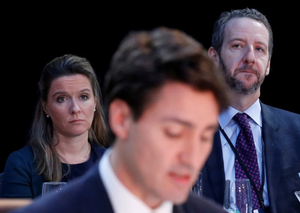 So the PM's former Principal Secretary Gerry Butts gave his testimony before the Justice Committee last Wednesday and Mr. Trudeau gave his "non-apology" press conference last Thursday. Neither staunched the continuing drop in Liberal poll numbers and neither convinced anyone that they were just "discussing options" and weren't aware that Attorney-General Wilson-Raybould had "really" made up her mind when she delivered her message to that effect last September 17 to the Prime Minister.
Remembering King....“Courage uncompromised by timidity. Justice not cheapened for expediency…”
By Beryl Wajsman on January 15, 2019
Today, The Rev. Dr. Martin Luther King, Jr. would have turned 90 years old. Tragically, he was struck down by an assassin's bullet at the age of 39 on April 4 1968. He had frequently told his wife that he felt he would never reach his fortieth birthday.
Bernard Landry and the country that never was
By David T. Jones on December 2, 2018
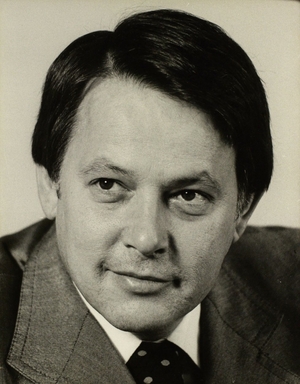 Washington, DC - Bernard Landry died on 6 November. Former Prime Minister of Quebec, a leader of the Parti Quebecois, and life-long devotee of an independent Quebec, Landry was a senior figure in Quebec politics throughout his career.
Now that the official period of mourning has passed with a state funeral, and the tributes and formal recognitions have been written, perhaps there remains a moment for an engaged outside (American) observer of Canada-Quebec to offer further perspectives.
Time for some perspective on laity in Quebec
By Beryl Wajsman on October 15, 2018
 It was certainly not our most pressing issue. But since Premier-elect François Legault decided to bring the issue of laity front and centre on his first day, and since that issue has caused so much debate and discord the past week - including thousands of Montrealers demonstrating this past Sunday - we thought it was important to bring some perspective, and a warning, on this issue.
It is quite reasonable in the western liberal tradition to put up a firewall between faith and state. From American President James Madison stating, “The civil administration shall take no cognizance of religion” at the beginning of the 19th century, to the French “modele Republicain” inspired by Jean Jaurés at the end of that century, freedom of religion has been accepted to mean freedom from religion as well.
What the USMCA means for Canada
By The Hon. David Kilgour on October 15, 2018
 Trade between the U.S. and Canada has long provided millions of good livelihoods across both countries. Many people thus supported the 1988 Free Trade Agreement (FTA) and its expansion in 1994 to include Mexico in the North American Free Trade Agreement (NAFTA).
After more than a year of negotiations, the three national governments, sometimes referred to as the “Three Amigos,” recently agreed in principle to change and rebrand NAFTA, which today regulates what has grown to more than (U.S.) $1.2 trillion yearly trade in goods and services. The new agreement is renamed the U.S.-Mexico-Canada Agreement (USMCA).
Let's get serious on energy in Quebec
By Beryl Wajsman on October 15, 2018
 Premier-elect François Legault has said over and over again that he wanted to be known as the "business premier." His platform calls for a large reduction in the bureaucracy, less bureaucratic forms, more ways to attract out-of-province investors and lower taxes. We can think of no better priority for him to commence his mandate on. And we can think of no better area to start his program than in energy. It is time for Quebec to get serious on its energy potential.
The time is very propitious. The previous government's failure to move on the Energy East pipeline has still left
Security clearances have sunset clauses
By David T. Jones on September 5, 2018
 Washington, DC - A U.S. security clearance is a privilege, not a right.
But now we have a selection of once-upon-a-time senior officials squealing like stoats caught under a fence because their security clearances have ended.
This is viewed by the ever-hostile media as petty vengeance against critics of the Administration.
Having held a security clearance since I was a young Army intelligence lieutenant through the present, I have long recognized that clearance is contingent on circumstances.
A security clearance is accorded essentially on two criteria: an investigation of the individual and “need to know.”
Remember Robillard: Rays of reasons for Quebec for all parties
By Beryl Wajsman on August 31, 2018
 In an election, all parties look for policies to attract voters. Too often they are ideas at the edges meant not to upset too many. We would suggest that this is a time for big ideas. And lucid ones.
Precisely at this time in 2015 the Robillard Report was released. Lucienne Robillard was the former federal Treasury Board President among other portfolios she handled so well under Prime Minister Chrétien. She was named by Premier Couillard to head a Commission to study ways to reform and improve Quebec governance. Her conclusions pulled no punches. It was the broadest and most wide-ranging agenda of common sense in a generation.
Surprise! English is an official language of Quebec
By William Johnson on August 31, 2018
 Quebec’s quiet certitudes were troubled on the morning of August 23 when the Québec Solidaire party published on its website the following sentence: “English is an official language of Quebec and Canada.” Horrors!
The consternation was compounded when the party’s co-spokesperson, Manon Massé, repeated the heresy, in English, in a tweet, and then, after launching the party’s election campaign that afternoon before the press, she replied, in French, to a reporter’s question: “Currently, because we are still in Canada, English is an official language in Quebec. What I’m saying is that Québec Solidaire is a sovereignist party, pro-independence, which, in its first mandate, will launch the process of Quebec’s independence and, in that Quebec, for Québec Solidaire, French is the official language.”
"SLĀVs" to the ignorance of political correctness..
By Beryl Wajsman on July 16, 2018
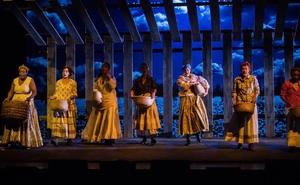 The Montreal Jazz Festival's decision to terminate the run of the play SLĀV was a cowardly submission to the ignorance of political correctness that will stain the reputation of this city and its citizens in ways that the organizers of the Festival cannot yet imagine. And because this affront to free expression happened in North America's battleground of culture wars - where speech and language rights are under regular attack - it will add to the impression of many that this city has become an intolerant, sad and unsophisticated place where courage is in short supply and reason is in short measure.
Matisse
By Robert Landori-Hoffman on July 16, 2018
 It was the summer of 1949 . World War Two had ended four years earlier and Europe’s shell-shocked peoples were trying hard to put behind them the horrors with which they had to cope during five years of hostilities.
Nowhere was this more apparent than on the Cote d’Azure, the French Riviera. Bikini-clad holidaymakers, their bodies coated with delightfully smelling suntan lotion, its perfume wafting in the air everywhere, invaded the beaches in great numbers and partied at night with gay abandon.
NATO: TIME FOR A REBOOT?
By David T. Jones on July 16, 2018
Washington, DC ~ NATO was conceived in 1949 as an international security alliance against the imminent prospect of a Soviet/Warsaw Pact invasion to conquer that part of Europe it did not already dominate. The situation was, if not desperate, intensely challenging as massive Soviet forces had smashed Nazi armies on the Eastern Front and captured Berlin in 1945—only four years earlier—and consequently held the eastern half of pre-war Germany as well as half of Austria. And, subsequently, Moscow eradicated any traces of incipient democracy in countries such as Poland, Hungary, Bulgaria, Albania, and Romania. More disconcerting, the Soviets orchestrated a coup in struggling democracy Czechoslovakia, transforming it into a Soviet satrap. Communist parties were strong in France, Italy, and Greece (where armed insurgency was in progress).
Fracking for natural gas is key to wealth creation in Quebec
By Robert Presser on July 9, 2018
 While many Quebeckers like to unplug in the summer and turn their backs on politics, in a few weeks they can expect representatives from the Quebec Liberals, PQ, CAQ and Quebec Solidaire to begin breaking into their peaceful hazy days. There will be no avoiding the October 1st provincial election, and one of the major issues will be economic development and wealth creation in Quebec.
Francois Legault of the CAQ reminds voters at every turn that Quebec’s finances only appear healthy because we receive $11 billion in equalization payments under the current regime. Our $2 billion budget surplus would really be a $9 billion deficit if we did not have the generosity of the rest of Canada to fall back on.
When Two Great Egos Collide: Lessons from the Truman-MacArthur Meeting
By David T. Jones on June 9, 2018
 Washington, DC - The “on again/off again” Summit between President Donald Trump and Pyongyang’s leader Kim Jong-un, has been media played more as farce (and Trump incompetence) than serious examination of the circumstances in play.
Clearly irritated by Trump’s “break the box” maneuvers to address the existential threat of North Korean nuclear weapons, the “professionals” (having been cut out of the planning) found ways to denounce it—and predict failure. Thus, Trump’s decision to cancel the Summit was vindication of the “I told you so” nature by these axiomatic nay-sayers. And, consequently, they are disconcerted by the intensive efforts to “retrack” the Summit and, if anything, have redoubled their demurs over any Summit prospects.
RFK: "A tiny ripple of hope..."
By Beryl Wajsman on June 6, 2018
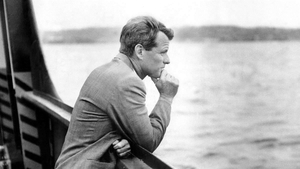 “In our sleep, pain which cannot forget falls drop by drop upon the heart until, in our own despair, against our will, comes wisdom through the awful grace of God.” ~ from Aeschylus’ “Agamemnon”, one of RFK’s favorite quotes he repeated often after the murder of his brother.
Today we commemorate the 50th anniversary of the death of Sen. Robert F. Kennedy. He was shot on June 5, 1968 at the Ambassador Hotel in Los Angeles as he was celebrating the California primary victory that would have led him to the Democratic presidential nomination. He died soon after midnight of June 6th. For many of us who were coming to political maturity in that turbulent time, hope seemed to die with him.
Israel changed the world - in the deepest and most meaningful way
By Lise Ravary on May 29, 2018
 In 1993, I travelled to Israel for the first time in my life. I was there to cover the restaurant scene with Toronto critic Sarah Waxman who became, with her husband, the late great actor Al Waxman (who used to joke he was my daughter's yiddishe mama) great friends of our family.
During that trip, I had the privilege of meeting Itzhak Rabin and his wife Leah who were dining next to us at The Cow on the Roof in Jerusalem. There was so much hope and optimism in the air. How that seems so far away now.
Israel changed and so did we all.
In 2013, I published a book entitled ‘Pourquoi moi ?’ Why me.
Paul Ryan – Is There a French Parallel?
By David T. Jones on April 29, 2018
 The three traditional lies—so time worn that they have become caricatures—are
Of course I’ll respect you in the morning;
I’m from the government, and I’m here to help you; and
I need to spend more time with my family.
The final lie—the one to which Paul Ryan resorted when announcing that he would not run for reelection this November—is always hard to disprove definitively. The individual may have “jumped” before being defenestrated. (S)he may be totally burned out from effort (either successful or not) that health may be an imperative for departing.
50 years ago today we lost a King....
By Beryl Wajsman on April 4, 2018
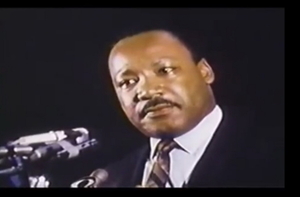 Fifty years ago today, The Rev. Martin Luther King, Jr. was assassinated while standing on the balcony of his motel room in Memphis. He had gone there to champion the rights of African-American sanitation workers surviving on subsistence wages and striking for fair treatment. They marched carrying signs that declared, "I Am A Man!"
King was slain by a rifle blast from James Earl Ray in the fading light of late afternoon surrounded by his closest brothers in arms including Andrew Young and Jesse Jackson with whom he had been sharing laughter inside their rooms just moments before.
Canada is Sucking and Blowing on NAFTA
By Robert Presser on April 2, 2018
 The renegotiation of the North American Free Trade Agreement, NAFTA has been going on for over a year now with several rounds of discussions held between its three partners – the US, Canada and Mexico. Up until very recently, the American negotiating team, led by chief trade negotiator Robert Lighthizer have complained of slow progress due to a reluctance by Canada and Mexico to engage wholeheartedly on US demands for massive changes to pillars of the existing pact. These most contentious points include the auto sector and US demands for minimum US content in all autos manufactured for sale in the US as well as proposing the effective dismantling of Canada’s supply management programs in the food and dairy industries.
The Russia Question: Stop the whining. Everybody does it
By David T. Jones on March 30, 2018
Washington, DC ~ If truth is the first casualty in war, perspective is the first casualty in politics.
Indeed, the ongoing frenzy of what Russians did when, where, how, and with whom during the 2016 U.S. presidential election is an illustration of disingenuous naiveté. One would conclude that the U.S. political structure was the equivalent of a convent of innocent religious refugees savaged by a barbarian horde.
The longstanding historical reality is that “everybody does it.”
And thus the question arises, “Do you remember Philip Agee?
Hampstead: Trying to penalize what it can't criminalize
By Beryl Wajsman on March 24, 2018
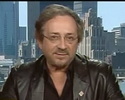 Hampstead's ban on smoking in public spaces - including sidewalks - is an affront to a free community, unconstitutional in its breadth, unenforceable without encroachments on individual liberty, unnecessary even for health reasons and exhibits the worst elements of blue-haired prohibitionism that forgets the teaching of history which is that prohibitions increase crime. And the paternalistic manner in which Hampstead did it is a slap in the face to the democratic due process owed to voters. Elected officials are our employees. Not the other way around.
Outremont: Yellow is not the new red
By Beryl Wajsman on March 14, 2018
Last week Outremont brought shame upon itself. A group of residents came to city council to demand restrictions on school bus traffic. Not all school bus traffic in an area with some of the highest concentration of schools on the island. Just the buses carrying children of Hasidic Jewish families. And these residents wore yellow badges to emphasize their point.
Let's be as blunt as we can. These people were not complaining about buses. They were complaining about who the buses were carrying. Jewish children. This is the same group that lobbied successfully to get a ban against more synagogues being opened on Bernard Ave. Some of those wearing yellow badges claimed not to understand their significance. If they didn't understand it was because they didn't want to understand. But their leader clearly did.
Troika
By Robert Landori on March 4, 2018
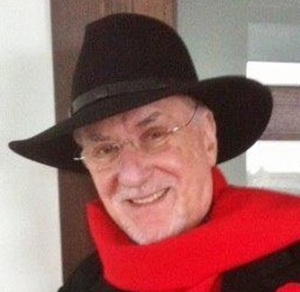 He was born in the town of Bialystok, Poland. The day the German Army invaded his country on September 1, 1939 he was visiting Warsaw. Instead of returning home, he enlisted in the Polish Army. They were happy to take him, principally because he spoke faultless German. (In those days most Polish Jews spoke Yiddish only and they mistook him for a goy.)
He fought first against the Germans and then against the Russians (who in, 1939, had signed a non-aggression pact with the Germans).
He was captured and sent to Siberia.
He somehow escaped the Gulag and found his way to the UK through Scandinavia in 1942, and enlisted in the Free Polish Army there.
The What-Me-Worry 2018 Federal Budget
By Robert Presser on March 4, 2018
Hey Canada, things are going great! Unemployment is at 5.8%,a 4-decade low, we have the top growth rate of the G-7 nations since the second quarter of 2016 at 3.2%, and federal revenue growth has been stronger than expected. Oh, but we still have deficits planned for the next decade or so? We know that Liberal and NDP voters don’t care, so spending an extra $12-18billion per year with no end in sight allows the feds to pursue initiatives we all care deeply about – gender equality, reconciliation, and other promises from the 2015 Liberal election platform. Well, not so much for all those infrastructure spending plans, we can’t seem to get that money out the door – but no matter, with all the growth in other sectors we don’t need all those new roads, bridges or water treatment plants in any case!
The Parkland Massacre: The NRA’s Waterloo?
By Beryl Wajsman on February 28, 2018
"...the wolf will lay down with the lamb and a little child shall lead them..." ~ Isaiah 11:6
The wolves haven't laid down with the lambs, but the children have picked up the standard of their fallen friends. As one American writer put it, "The kids of Douglas High in Parkland may be the NRA's worst nightmare." Unlike the other school shootings, the young survivors are speaking truth to power. And the world is listening.
Unlike other school shootings, the kids of Parkland are older and bolder. They have used social media virally to call out the cowardice of politicians who are too afraid to act and even challenged their parents who may not know how to act.
There may not be a solution to gun violence in the United States
By David T. Jones on February 28, 2018
Washington, DC Although not the most costly in terms of lives lost, the killing of 17 students in Florida’s Marjory Stoneman Douglas high school on February 13 has unleashed an unprecedented “I’m mad as hell and not going to take this any more” reaction.
Poignant scenes and finger pointing have dominated the national media, coupled with commitments on various political/social levels to “do something.”
Consequently, the cynical, ritualized reaction of “been there; done that” so far as public manifestations of grief/concern are concerned may not suffice to mitigate the outrage.
A fresh examination of realities might be useful. Will they fit the United States socio-political circumstances?
An open letter against the closing of Mount Royal traffic
By Me. Hannah Deegan on February 20, 2018
 Dear Mayor Plante , I wish to voice my opposition to your decision to close a large part of chemin Camillien-Houde, effectively removing one of the more convenient, and beautiful, east-west trajectories of this city.
I drive that route every morning on my way to work, and it’s truly one of the things I cherish the most about my day. When everyone obeys the traffic signs, as they usually do, Camillien-Houde is a safe road, both for cyclists and drivers. I do not believe this decision is in the best interest of Montreal’s population. Closing the road will increase traffic congestion on other major arteries in the city by re-routing thousands of cars daily. It will also needlessly restrict access to the park, especially for those with families or limited mobility.
Canada must show resolve against Iran or children will continue to be slaughtered
By Dr. Sima Goel on February 20, 2018
 In Shiraz of 1978 when I was 13 and used to slip out of my house to protest the Shah’s corrupt government, I was never arrested nor hurt. Flash forward to January 2, 2018, an 11 –year- old boy participates in government protests in the small town of Khomeinishahr: he dies as a result. Nearly half a century later, and Iranian children still feel they have to march to get their leaders to listen to the people.
Iranians hoped that when President Obama lifted economic sanctions against Iran, inflation rates would drop, employment would rise and foreign investment and tourists would return to this country so wealthy in natural resources and potential; but under Rouhani’s government, the expected gains have not materialized.
UToo Is no longer just an Irish band. Let's guard against mass hysteria
By Me.Linda Hammerschmid on February 20, 2018
 It mystifies me every time I read or hear about people, from every walk of life, who do the unthinkable, or even the risky, and believe no one will ever ferret out the truth.
If orange is the new black, and 0 is the new 6, is sexual abuse the newest fad? No disrespect to anyone who was actually sexually molested, but the flood gate that seems to have been opened in 2017, thanks to men like Harvey Weinstein, appears to have been holding back an ocean of complaints against an ocean of transgressors.
In this day and age of no more privacy given social media, investigative journalists worth their salt, drones, hackers - the list is endless – why does anyone actually think no one else will figure it out, or talk?
Special Prosecutor Robert Mueller's indictments are legally questionable
By Beryl Wajsman on February 17, 2018
Special Prosecutor Robert Mueller's indictments are legally questionable, intellectually dishonest and threaten an open internet and free expression...
Let the piling on begin but read my comments past the headline please. I am anything but a Trump fan. I find him offensive on so many levels not the least of which are his affronts to aesthetic sensibilities, intellectual rigour and the civil discourse demanded of all public officials but particularly of a President. But I am equally offended by the hypocrisy of these indictments which would threaten the very standards and liberties we all feel are jeopardized in the conduct of this administration.
Closing Mount Royal: Plante administration exploits the politics of fear
By Beryl Wajsman on February 15, 2018
George Orwell warned that the limits to freedom by command-state government will come as much through the use of the psychology of fear as the brute force of arms. That is a prophecy that has become overwhelmingly evident as rule and regulation is constantly formulated to limit our everyday actions “for our own good.” Quebec elected officials know that game very well. Le Jour’s great editor Jean-Charles Harvey first condemned it in his seminal novel of Quebec political life titled “La Peur” – “The Fear” – published in 1938 in the darkest time of the Duplessis era. But the tactics of the old right, have been adopted by the new left.