
Society
Society
Remembering King....“Courage uncompromised by timidity. Justice not cheapened for expediency…”
By Beryl Wajsman on January 15, 2019
Today, The Rev. Dr. Martin Luther King, Jr. would have turned 90 years old. Tragically, he was struck down by an assassin's bullet at the age of 39 on April 4 1968. He had frequently told his wife that he felt he would never reach his fortieth birthday.
"SLĀVs" to the ignorance of political correctness..
By Beryl Wajsman on July 16, 2018
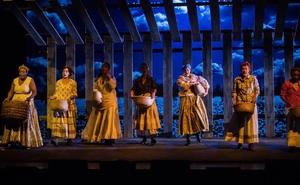 The Montreal Jazz Festival's decision to terminate the run of the play SLĀV was a cowardly submission to the ignorance of political correctness that will stain the reputation of this city and its citizens in ways that the organizers of the Festival cannot yet imagine. And because this affront to free expression happened in North America's battleground of culture wars - where speech and language rights are under regular attack - it will add to the impression of many that this city has become an intolerant, sad and unsophisticated place where courage is in short supply and reason is in short measure.
Outremont: Yellow is not the new red
By Beryl Wajsman on March 14, 2018
 Last week Outremont brought shame upon itself. A group of residents came to city council to demand restrictions on school bus traffic. Not all school bus traffic in an area with some of the highest concentration of schools on the island. Just the buses carrying children of Hasidic Jewish families. And these residents wore yellow badges to emphasize their point.
Let's be as blunt as we can. These people were not complaining about buses. They were complaining about who the buses were carrying. Jewish children. This is the same group that lobbied successfully to get a ban against more synagogues being opened on Bernard Ave. Some of those wearing yellow badges claimed not to understand their significance. If they didn't understand it was because they didn't want to understand. But their leader clearly did.
UToo Is no longer just an Irish band. Let's guard against mass hysteria
By Me.Linda Hammerschmid on February 20, 2018
 It mystifies me every time I read or hear about people, from every walk of life, who do the unthinkable, or even the risky, and believe no one will ever ferret out the truth.
If orange is the new black, and 0 is the new 6, is sexual abuse the newest fad? No disrespect to anyone who was actually sexually molested, but the flood gate that seems to have been opened in 2017, thanks to men like Harvey Weinstein, appears to have been holding back an ocean of complaints against an ocean of transgressors.
In this day and age of no more privacy given social media, investigative journalists worth their salt, drones, hackers - the list is endless – why does anyone actually think no one else will figure it out, or talk?
The Holocaust: On memory and witness
By Beryl Wajsman on January 27, 2018
 “In our time, it is more important to be hard and relentless than genteel and unobtrusive.”
Today, January 27th, is the 73rd anniversary of the liberation of Auschwitz by Soviet troops. For this reason, this date was chosen as International Holocaust Remembrance Day. This year the World Jewish Congress has launched the #WeRemember campaign in the face of studies that have shown that half of young people in the west today have not heard of The Holocaust. Think of it. Half. Please share this.
Couillard administration begins to discuss potential Universal Basic Income initiative
By P.A. Sévigny on January 18, 2018
 Although it’s presently considered to be among the most ambitious and progressive policy initiatives on the table, the Couillardadministration’s recent policy survey indicates that it’s going to take a while before there’s going to be any kind of a realistic discussion about a working UBI (Universal Basic Income) policy within Québec’s National Assembly.
While early reports indicate that an efficient and universal UBI policy could make a serious difference in the lives of the working poor, Simon Lejeune’s analysis of the Couillard administration’s recent UBI report describes at least 6 problems that must be dealt with before any government can realistically consider adopting a UBI policy.
On Salman Rushdie
By Alecs Kakon-Grundman on November 19, 2017
 Having recently completed “A Sketch of the Past” from Virgina Woolf’s Moments of Being, I walked away from the recent talk by Salman Rushdie at the Jewish Public Library inspired. He was enigmatic, charming and incredibly funny. His staggering playfulness interspersed with witticisms about everything from Saul Bellow and Heraclitus to Trump and the challenges of journalism today were enlightening to say the least. He spoke of the intersection of the public arena with private life and how that plays a role in fiction writing and journalism, as well as politics and social responsibility. However, it was not those reflections that inspired nor touched me. It was not his gaze outward that allowed me to get to know him a little better, rather it was the moments between his speech, the moments when he glanced inward that opened a porthole into who the man behind the work truly is. So, who is Salman Rushdie?
The Church in Quebec - The challenge of asking why?
By Father John Walsh on October 1, 2017
 In the recent visit of the Catholic Bishops of Quebec to Pope Francis, Bishop Lortie of Mont Laurier, vividly and honestly described the Catholic Church in Quebec. He told Francis that the Bishops “are aware of the limits and poverty of our Church and we are looking for concrete ways to develop a missionary spirit in a Quebec that has broken its relations with the Catholic tradition and heritage and chooses to find its references elsewhere than the Gospel. In the present context being pastors of a small number, a little flock, we ask ourselves as pastors, how can we reawaken the faith, reveal the love and mercy of God, open hearts to the Gospel, invite people to conversion, create disciples … in a secular, pluralist Quebec that is often allergic to religion?”
Herb Paperman: Bringing conscience and compassion to community "A righteous, learned, man of deeds."
By Beryl Wajsman on August 7, 2017
 There is a discussion in the Talmud among a number of Rabbis on who we should stand up for when they enter a room. They decided on three types of people. The righteous, the learned and the people of deeds. Yesterday, Montreal lost a man who embodied all three. Herbert Paperman passed away at the age of 92.
Herb, as he was known to everyone, passed away as he had lived. Quietly, with dignity and surrounded by love. He was beloved by all, but it was right and just that his final hours in this vale were warmed by his beloved wife Leila and their family at his side.
Dare to dream! Passion is not the enemy of reason. Fear is. Commencement 2017
By Beryl Wajsman on June 15, 2017
 Many people will be graduating this month. They go forth at a time in history of great danger as well as great opportunity. They are surrounded by far too much sham and drudgery, but also by noble acts of selflessness and courage. Here are some thoughts for them, the class of 2017.
You will soon be leaving the comfortable world of academe for the much harder school of life. It’s waiting for you. Just there in the early morning. What you leave you should always remember. Keep these years of study and searching warm in your hearts, and remember the lessons of effort and striving. It is the truth you looked for. Never forget that goal in all your endeavors. It is pre-eminent of purpose.
JFK:Why he matters still
By Beryl Wajsman on May 29, 2017
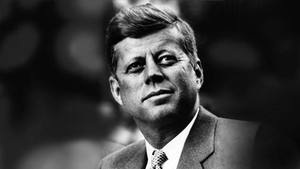 “When he shall die, take him and cut him out in little stars, and he will make the face of heaven so fine that all the world will be in love with night and pay no worship to the garish sun.” ~ Robert F. Kennedy quoted these lines from Romeo and Juliet upon the death of his brother....
Today we commemorate the centenary of the birth of John Fitzgerald Kennedy. Think of it. He could very well have still been with us. Think of the difference in this world if he had lived the vigorous and robust life he could have. Just over a half-century after his assassination on that terrible day in Dallas, his hold on our imagination does not wane. It is important to reflect on the reasons why.
CULTURAL APPROPRIATION IS A CROCK
By David T. Jones on May 28, 2017
 Washington, DC - Sometimes one is impressed over the trivial pursuits of injustice collectors. (One of) the latest “viewings with alarm” has been the contretemps over “cultural appropriation.”
The intimation appears to be that the “culture” of a specific group is itself the equivalent of patent-protected material, and that nobody is permitted to act in a manner that reflects another member/group of society.
It is hard to imagine anything more absurd. History and society advance by the spread of ideas, inventions, and associated technology. Culture, not just biology, is constantly evolving. Otherwise, my Chinese mother-in-law would never have been permitted to read Shakespeare as a child. Or members of First Nations to use rifles while traveling on snow mobiles.
Are we living in the 2nd or 3rd dimension now?
By Suzanne Reisler Litwin on February 28, 2017
 This past weekend I went to a party. It was an amazing celebration for a couple of friends’ birthdays. There was a dj, lights, and a photo booth. There were balloons, fabulous decorations and candies for the loot bag. The party was filled with festive people talking, sharing and celebrating the birthdays. It was a happy time to share with friends.
There were so many people engaged. However, the children at this party were faced downward, unaffected. They were all engaged with their mobile phones. They were messaging, surfing, emailing, instagramming, and snapchatting. What I noticed most is that they were not interacting with their friends. They were not dancing or paying attention to the actual party. They were virtually removed and living in their two dimensional world.
Quebec's problem with due process and the rule of law
By Beryl Wajsman on January 26, 2017
 "The means are all important. The means by which a society finds guilt or innocence is what determines whether it has a place at the table of civilized nations." ~ Justice William O. Douglas
Attorney-client privilege. Guilt beyond a reasonable doubt. Freedom of the press as the fourth estate of government. Confidentiality of journalists' sources. Pretty straight forward stuff right?Any tenth-grader in a civics class gets these. So why is it that so many Quebec prosecutors and judges not get it?
Marcus Aurelius and his Meditations
By Prof. Peter March on January 15, 2017
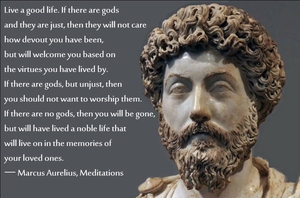 It is difficult to write this little piece. My chest bursts with the desire to weep for sudden memory, uninvited shame, and long regret. Making myself write it, well, that is an exercise Aurelius would have demanded of me. So I will try to be a good Stoic. In his way.
I first read Aurelius in Gorsebrook School Elementary when the principal, Mr.Moser read a little journal which I put up on the blackboard each morning before school. That would be in Grade 6 and I was twelve.
YAHYA AND ALI: TWO HEROES WHO MADE ME CRY TODAY
By Beryl Wajsman on January 4, 2017
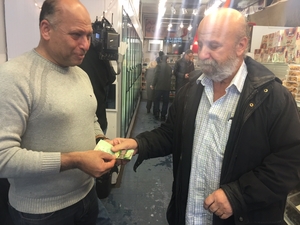 This made me cry today. We live in a time when too many cannot bear to confront in themselves the realities of this thing called life. They refuse to reflect on the true purpose of our own fleeting existence, much less our own inevitable mortality. It's too sad for them. The resolve we can demonstrate that defines a life of purpose, is too difficult for them. Most can't be bothered. They hide behind veneers of false illusions and ascribe unwarranted importance to ungracious consumption, childish games and purile entertainment. Rare is there appreciation for true beauty, thought, love. Rarer still are there examples of personal engagement to bind up the wounds around us. Character, fidelity, caring are too often scorned as weak. A corroding cynicism has pervaded our everyday life and our everyday relationships.
Leonard: Of poetry and power...
By Beryl Wajsman on November 21, 2016
 It has been written that we love so that we know we are not alone. The outpouring of love for Leonard Cohen this past week has brought all Montrealers together. In our grief, with pain falling drop by drop upon the heart, no one was alone here.
From the hundreds who stood in near freezing temperatures outside his now iconic greystone on rue Marie-Anne to the musicians who appeared - seemingly spontaneously - in various sites singing Cohen's songs to the artists painting canvas tributes. No one was alone. Love was in the air in this time of sadness. A love born in the poetic pathos of the words of this most gifted son of this island.
Au revoir, Le Mas des Oliviers
By Robert Presser on October 29, 2016
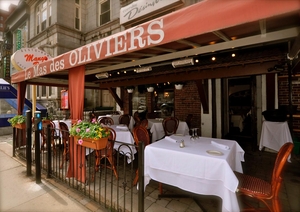 There are restaurants around Montreal that were anchors of my youth, all gone but certainly not forgotten by those of a certain age. I remember lunches at the Brown Derby with my best friend, Bernie Hyams, dinner at Pumpernick’s after my grade school graduation, watching Magic Tom at the Beaver Club at the Queen Elizabeth hotel, and the list goes on. These restaurants were gathering places for clients of many generations, ethnic and linguistic backgrounds, and they mingled in these locales as if they were public squares. Le Mas des Oliviers on Bishop was one of those restaurants where the business community mixed with politicians and notables at lunch and dinner, and for forty years owner Jacques Muller and his crew served them timeless French cuisine in a ground level location that mixed Norman Conquest décor with Quebec charm and grace.
Random thoughts of a non-dog owner (In no particular order)
By Dr, Mark Grossman on September 19, 2016
 I am neither a dog lover or hater. I cried when Old Yeller died. Underdog was one of my childhood heroes.
But when I am invited to your house please have a person, and not your dog, answer the door. I do not like being pawed, barked at and sniffed in my nether regions in your vestibule, prior to be granted free passage into your home. I won’t object if you try to sniff me.
Please do not expect me to go onto the road so your dog can remain in the passing lane of the sidewalk. Do not assume that I wish to interact with your dog when out on my evening stroll. I will engage and babble in baby talk If I want to have some dog time.
Message to Millenials
By Jill Salomon on September 19, 2016
 I'm so glad that I was born in 1961. I am a product of my time. A time of rebellion against a raging war in Vietnam. A time of loving love and wanting peace - but really wanting it. Meaning it. Woodstock and the free love movement. Colors and nature and coke ads where they wanted us all to teach the "world to sing".
When Bell wanted us to "reach out and touch someone." When there were four movies that we watched each year on one televisio. -(The Wizard of Oz, Mary Poppins, The Sound of Music, It's a wonderful Life) - and it wasn't an HD big screen. You may have even had rabbit ears on top of that television for better reception. (For the millenials, you can google "rabbit ears.")
Ottawa's plain packaging cigarette proposal: Illogical, illiberal and illegal
By Beryl Wajsman on September 19, 2016
 There have been many over-the-top actions by governments in their wars on tobacco, but few have been as illogical, illiberal and illegal as the proposal by Ottawa to enforce uniform plain packaging on cigarette packs accompanied by grotesque pictures of diseased organs. It doesn't work, breaches fundamental liberal principles of free expression and infringes trademark protections. Worst of all, it will cost us money that the government will eventually take out of our pockets.
To begin with, tobacco is a legal product and smoking is a legal activity. For those who are concerned that smoking puts a strain on our health care costs here are the real numbers.
THE TRIUMPH OF THE NOSEY PARKER
By David T. Jones on August 19, 2016
 Washington, DC ~ Politics is now in the phase of “let it all hang out” and, if there is reluctance to such exposure, rip it out of the recalcitrant.
Thus the endless clarion calls for politicians to release their federal tax returns. Ostensibly, these demands are couched in dulcet “good government” terms designed to reveal whether certain financial claims by a candidate are accurate or that income is honestly obtained. “Transparency” is the new buzz word.
In truth these demands are hypocritical and self serving. They are emphasized by political opponents who suspect that published tax returns will provide further grist for derogatory attacks.
Quebec Human Rights Tribunal's Ward decision is a threat to free speech
By Beryl Wajsman on July 28, 2016
 We have written often of Quebec's problems with freedom of expression. We have received awards for those editorials. Particularly one in opposition to Quebec's upcoming Bill 59 that would give the province's Human Rights Commission more power to curtail expression. We have advocated for that freedom to Ministers in the face of government encroachment when everyone was silent. And we have won those battles too, especially important being the defeat of Quebec's Payette Plan which would have imposed a government registry of - and language testing for - all journalists. But the struggle for the minds of Quebec's opinion-makers - and its citizens - on this issue continues.
Elie Wiesel: "And now he belongs to the ages..."
By Beryl Wajsman on July 2, 2016
 Elie Wiesel - child survivor of Auschwitz, renowned author, Nobel Peace Prize laureate and conscience of our time - has died. We shall not see his like again. He now belongs to the ages. I had to share my feelings at this sad moment with you all...
The Book of Joshua tells us that, “…the Lord delivered up the Amorites… and he said Sun, stand thou still upon Gibeon; …And the sun stood still at mid-day, until the people avenged themselves upon their enemies.” I used those words in my eulogy at my father's funeral.
Some seventy years ago, Elie Wiesel was a young man with no name, no hope, no future and was known only by a tattooed number.
Grand Prix in the "inspector state"
By Beryl Wajsman on May 20, 2016
 We are a couple of weeks away from the Grand Prix coming to town. More than anything else Montreal stages, this event puts this city in front of the eyes of the world. And more than anything else Montreal stages, the Grand Prix week is responsible for up to 15% of annual revenues for many downtown stores, restaurants and bars. As we thought of what we will project this year, the images were very sad indeed.
The construction and repair madness will shoot out scenes reminiscent of the rebuilding of Balkan cities. It's not just the mess that will embarass us, it's the seeming total lack of planning and coordination. Getting around will be a nightmare for the more than 100,000 visitors expected that week.
Gender and bathrooms: A tempest in a piss pot
By David T. Jones on May 9, 2016
Washington, DC - For most of human existence and identifiable history, toilet facilities were wherever the urge struck one. The world was one’s toilet for those actions which could neither be delayed nor delegated. One memorable and illustrative little jingle went: “In days of old, when knights were bold, and toilets weren’t invented, they left their loads upon the roads and went away contented.” Chamber pots from standard dwellings were dumped on the streets (often just hurled from upper story windows). Creeks and rivers were open sewers.
You were into relatively modern times before society recognized the close connection between sanitation and disease. And while there was an appreciation that clean water was a significant health benefit, it is still recognized primarily in “Western” civilization.
Time to put the new prohibitionists on the run
By Beryl Wajsman on May 2, 2016
 It seems that every day that politicians wake up in the morning they want to make some new prohibition on our personal adult choices. They make war on cars; prohibit English even where the law allows it; make controls on soft drinks and fast food; restrict outdoor smoking; demand politically correct language; outlaw fireplaces and totally ignore privacy, property and commerce rights. We say enough. It's time to put the new prohibitionists on the run.
What sparked our ire this week was the controversy over the opening of the Jersey's Saloon bar on Sherbrooke St. in NDG.
First Bill 59, now Bill 74: Quebec's continuing problem with freedom
By Beryl Wajsman on April 11, 2016
 We have written, sadly and far too often, of the institutions in Quebec that have sought to impose conformity and constraint on freedom of expression and freedom of choice. It is a systemic malady. Last year the Couillard government proposed a law that would allow the Quebec Human Rights Commission (QHRC) to censor speech that promotes "fear of the other." The proposed law is Bill 59. Hearings are still ongoing, but national media and civil liberties groups have called it everything from a threat to free speech to pandering to Islamists. It has shamed Quebec and underscored once again Quebec's continuing problem with freedom.
Feminists should condemn the UN's Status of Women Commission
By Kevin Budning on April 4, 2016
 Usually I would say sit back, relax, and enjoy this piece. But instead, I must urge you to sit forward, tense up, and worry about the blatant hypocrisy, anti-Semitism, and double standards the United Nations has now placed on the state of Israel.
On March 24, 2016, the U.N. Commission on the Status of Women (CSW) concluded its annual meeting by labelling Israel as the worst violator of women’s rights in the entire world. Despite pronouncing themselves as an intergovernmental organization that is “instrumental in promoting women’s rights, documenting the reality of women’s lives throughout the world, and shaping global standards on gender equality and the empowerment of women,” one clearly should not judge an IO based on its mission statement.
Listen to the whisper of God
By Father John Walsh on February 21, 2016
 There is a current in history that is pushing us towards reconciliation and peace. Listen to the whisper of God everywhere. At Vatican II the whisper of God could be heard in the document Nostra Aetate when fundamental questions about our human existence were posed. Men expect from the various religions answers to the unsolved riddles of the human condition, which today, even as in former times, deeply stir the hearts of men: What is man? What is the meaning, the aim of our life? What is moral good, what is sin? Whence suffering and what purpose does it serve? Which is the road to true happiness?
Knowing the price of everything but the value of very little. The tragedy of La Presse' closure
By Beryl Wajsman on December 31, 2015
After 130 years, the daily La Presse has ceased weekday hard-copy publication reverting to its digital platform only. The Saturday edition will still be printed. This is a societal failure on multiple levels.
Marshall McLuhan was right when he said that the "medium is the message." But part of a medium - and media - being effective, is that it must be "in your face." We cannot rely on people choosing to go to digital platforms to be informed if we want to keep a healthy democracy. The essence of a healthy democracy, where citizens are not lulled into passive acceptance of pandering political sound bites and fleeting electronic images so often manipulated on social media, is that they have a chance to be deeply informed. Without an educated populace we have only a pretense of liberty with the uninformed electing the unchallenged.
Health care or homicide?
By Alan Hustak on November 8, 2015
 As Canada moves toward legalized assisted suicide starting in February, Quebec will jump the gun and become the first province to permit doctors to euthanize patients beginning next month.
When Quebec’s Bill 52 takes effect on Dec. 10, physician-assisted suicide will be deemed an acceptable health-care option which doctors may offer to certain terminally ill patients. Still to be resolved, however, is the question of whether Quebec’s law conforms to the Criminal Code of Canada, which makes it illegal “to help a person commit suicide, whether suicide ensues or not.”
Changes they 'r a comin'
By Me.Linda Hammerschmid on November 1, 2015
 The powers that be have decided to modify, yet again, the Quebec Civil Code of Procedure [C.C.P.] which will come into effect January 1, 2016. So it seemed only fitting to let you in on a few of the more important changes and new arrivals in the domain fondly known as Family Law.
You should first be aware that every time a Government changes existing legislation, under the guise of making Justice more accessible and less costly, I shudder.
"In our time..." 50 years ago
By Alan Hustak on November 1, 2015
 Fifty years ago this week marks a dramatic turning point in relations between Catholics and Jews.
On Oct. 2 8, 1965, Pope Paul VI issued a ground breaking Vatican II declaration, Nostra Aetate (In our Time) which ordered Catholics “to enter with prudence and charity into discussions and collaboration” with people of other religions, especially Jews . It represents an historic condemnation of anti-Semitism and paved the way for ecumenical dialogue. In particular, it rid the church liturgy of its offensive language which for centuries had dismissed Jews as “perfidious."
Ban the Bans!
By Suzanne Reisler Litwin on October 7, 2015
 Stop it! Just stop it! It's getting out of control! It's getting to the point that we can't live our normal lives without someone, some place, somewhere telling us you can't do something.
Smoking!
Ok, I get it. It's bad for your health. For this reason I don't smoke. I won't smoke. I made that decision for myself. I don't go to places where people smoke. That's my choice. But there are people who do enjoy smoking and that's their choice. Not mine, but theirs.